






What's Happening?
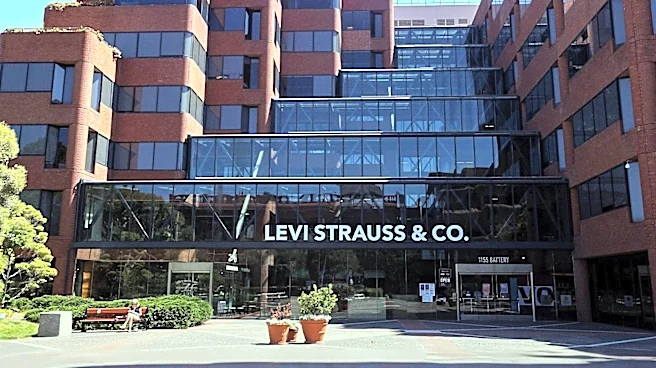
Levi Strauss & Co. (LS&Co.), the San Francisco-based apparel company, has introduced an AI-powered candidate experience agent named 'Andy' to enhance its hiring process. Andy is designed to make recruitment faster, more responsive, and more human-focused
by automating administrative tasks. The AI agent resides on the company's 'Work With Us' page on LeviStrauss.com, where prospective candidates can interact with it to explore job openings, ask common questions, apply directly, and receive application reminders. For LS&Co. employees, Andy automatically schedules interviews by integrating with hiring teams' Outlook calendars, eliminating the need for manual coordination. This automation is particularly beneficial for retail teams, who previously had to take time away from store operations to schedule interviews. Andy launched for U.S. and Canada corporate and distribution center roles in August and expanded to retail stores in September. Since its implementation, Andy has scheduled nearly 1,500 interviews, with interviews being scheduled in under one hour and candidates completing the process in an average of two days for retail roles and four days for corporate and distribution center roles. Additionally, Andy has answered over 2,000 candidate questions.
Why It's Important?
The implementation of Andy by Levi Strauss & Co. signifies a growing trend in U.S. industries towards leveraging artificial intelligence to optimize human resources functions. This move is important because it demonstrates how AI can address inefficiencies in traditional hiring processes, such as the time-consuming manual scheduling of interviews. By automating these tasks, LS&Co. aims to free up recruiters and hiring managers to focus on more strategic aspects of talent acquisition, such as building relationships with candidates and assessing cultural fit. This shift can lead to a more efficient and potentially more positive candidate experience, which is crucial in a competitive job market. Faster hiring cycles, as evidenced by Andy's ability to schedule interviews quickly, can also ensure that businesses are adequately staffed, directly impacting operational efficiency and team morale, especially in retail environments where staffing levels directly affect store performance. The success of Andy could encourage other U.S. companies to adopt similar AI-driven solutions, further integrating technology into the fabric of corporate operations.
What's Next?
Levi Strauss & Co. plans to expand the 'Andy' AI hiring agent globally in 2027, indicating a broader strategic move towards integrating AI into its worldwide operations. This global expansion suggests that the company views Andy's initial success in the U.S. and Canada as a blueprint for enhancing recruitment efficiency on an international scale. The company's chief talent, diversity and inclusion officer, Karthik Varatharaj, emphasized that this project is an example of intentional innovation, suggesting that LS&Co. will continue to explore and implement technological solutions to improve workflows. This initiative is part of LS&Co.'s larger mission to 'rewire and automate' workflows, building on a 2025 partnership with Microsoft to develop an integrated agentic AI platform for various departments, including IT, human resources, and operations. Future developments could include further enhancements to Andy's capabilities, such as more sophisticated candidate screening or personalized career guidance, as well as the deployment of similar AI tools across other business functions.
Beyond the Headlines
The introduction of AI hiring agents like Andy by companies such as Levi Strauss & Co. raises deeper implications regarding the future of work and the human element in recruitment. While LS&Co. asserts that Andy is designed to make the hiring process 'more human-focused' by offloading administrative tasks, the increasing reliance on AI in initial candidate interactions could subtly shift the dynamics of job seeking. There's a potential for ethical considerations around algorithmic bias, ensuring that AI systems are fair and do not inadvertently discriminate against certain candidate demographics. Furthermore, the long-term impact on the roles of human recruiters and HR professionals will be a key area to watch; while some tasks are automated, the emphasis on human connection and strategic decision-making may become even more pronounced. This development also highlights a broader cultural shift towards expecting instant and efficient digital interactions in all aspects of life, including employment, pushing companies to adapt their processes to meet these evolving expectations.