







What's Happening?
Despite widespread adoption of AI, its impact on economic productivity and growth is not yet clearly reflected in aggregate data like GDP. UNSW economist Professor Kevin Fox explains that traditional economic measures struggle to capture the value created
by AI, particularly in household use. Many individuals now use free AI tools for tasks previously performed by paid professionals, such as financial advice or health guidance. This shift means economic activity that once contributed to GDP is no longer being measured. While AI is augmenting jobs and creating new roles, it is not leading to mass unemployment. However, certain routine cognitive tasks are being automated. The slowdown in junior hiring observed since 2022 may be partly due to AI, but it is also intertwined with post-pandemic economic adjustments. The United Nations' System of National Accounts (SNA 25) has been revised to include recommendations for better measuring AI's economic impact, with leading agencies aiming for implementation around 2030-2031.
Why It's Important?
The inability to accurately measure AI's economic contributions poses a significant challenge for U.S. policymakers and businesses. Without clear data, it is difficult to formulate effective policies regarding AI adoption, workforce transitions, and economic growth strategies. If substantial value is being created but not captured in GDP, the true health and productivity of the economy may be underestimated. This could lead to misinformed decisions about investment, regulation, and social safety nets. For businesses, understanding the true productivity gains from AI is crucial for strategic planning and resource allocation. The current measurement gap also highlights a broader issue in the digital economy, where free services often create value that goes unrecorded. This situation affects how the U.S. assesses its economic competitiveness and prepares for future technological shifts, potentially impacting long-term economic planning and international comparisons.
What's Next?
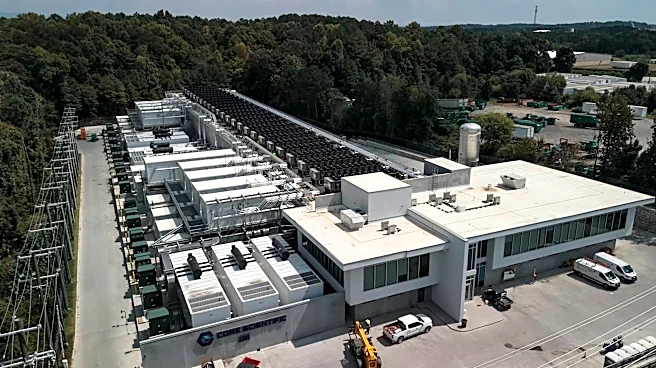
In the interim, before new measurement frameworks are fully implemented around 2030-2031, economists and statistical agencies will rely on assumptions and estimates, drawing data from countries like the UK, Ireland, and the US that are moving to better grasp AI's impact. There will be a continued focus on understanding how AI reorganizes the workforce, creates new job categories (like AI and data officers), and influences productivity at the industry and household levels. Policymakers will need to consider potential interventions to manage labor market adjustments, such as providing social safety nets for workers whose roles are significantly altered. Additionally, there will be increased scrutiny on the environmental impact of AI infrastructure, particularly data centers' energy and water consumption, as current estimates often come from the industry itself and may not be fully transparent. The debate around AI's societal and economic implications will continue to evolve, with a growing need for data-informed discussions.
Beyond the Headlines
The unmeasured economic impact of AI points to a fundamental challenge in how modern economies define and value production. The shift from paid services to free AI-powered household production blurs the lines between market and non-market activities, potentially understating overall societal welfare. This raises ethical questions about the distribution of value created by AI, as the benefits may accrue disproportionately to AI developers and users, while traditional service providers face displacement. Legally, the lack of clear economic metrics could hinder regulatory efforts to address issues like market concentration in the AI sector or the environmental footprint of AI. Culturally, society may need to re-evaluate traditional notions of work and economic contribution, recognizing the growing importance of 'invisible' household productivity. This situation also highlights the need for interdisciplinary approaches, combining economics, technology, and social sciences, to fully comprehend and navigate the complex transformations brought about by AI.