

What's Happening?
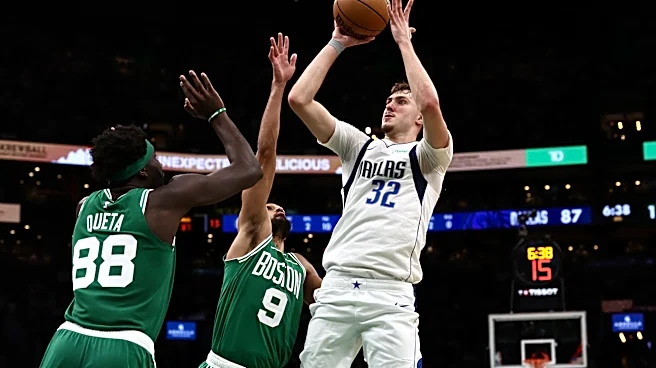
ESPN has decided to replace its scheduled national broadcast of the Golden State Warriors versus Dallas Mavericks game with a matchup between the Boston Celtics and the Denver Nuggets. This change, announced by the NBA, moves the Warriors-Mavericks game 90
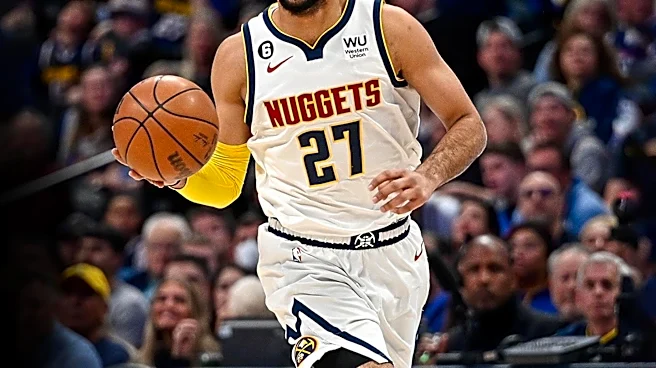
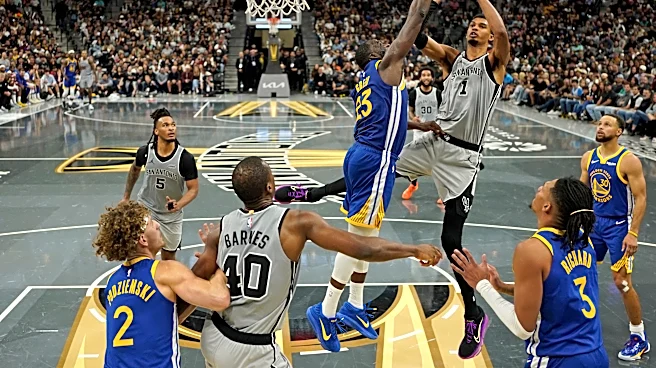
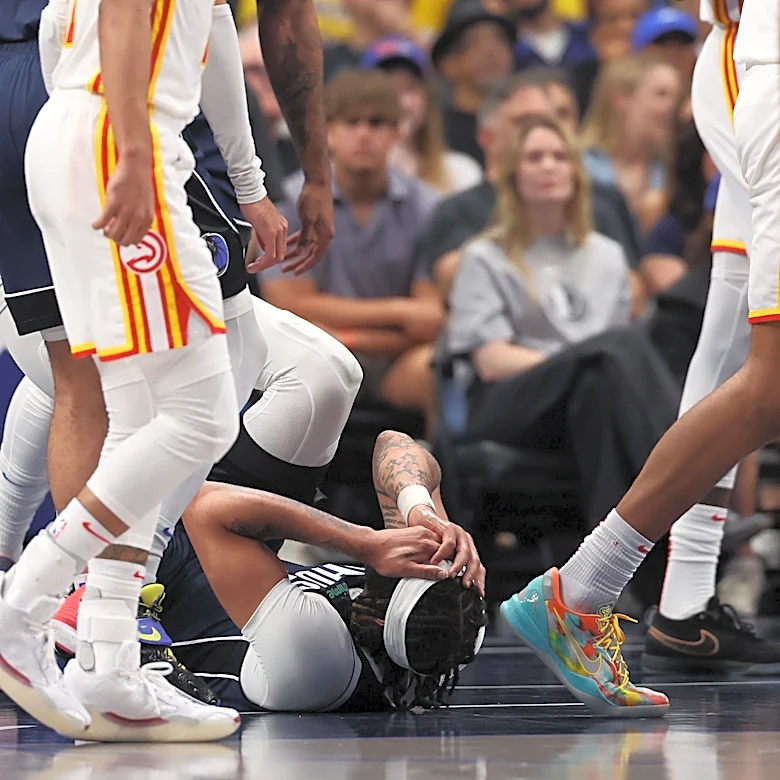
minutes earlier than its original prime-time slot. The decision stems from the absence of Warriors star Stephen Curry, who is expected to miss approximately a month due to a right abdominal tear. According to Yahoo Sports, Curry's injury has significantly impacted the Warriors' performance, as evidenced by their recent losses and the struggles of other players like Yaxel Lendeborg in his absence. The Denver Nuggets, led by Nikola Jokic, who is averaging 23.7 points, 10.5 rebounds, and 9.1 assists per game, will now receive national spotlight. The Nuggets currently hold a 7-4 record, while the Warriors are 8-5.
Why It's Important?
This broadcasting shift highlights the significant influence of star players like Stephen Curry on NBA viewership and national television programming. ESPN's decision underscores the commercial reality that individual player appeal can outweigh team records in attracting audiences. For the Warriors, losing a national broadcast slot due to an injury not only impacts their visibility but also potentially affects their brand and the exposure of their other players. Conversely, the Denver Nuggets and Nikola Jokic gain valuable national exposure, which can boost their profile and fan base. This move also reflects the NBA's and its broadcast partners' strategy to prioritize games featuring top-tier talent to maximize ratings, even if it means altering previously scheduled programming. It demonstrates how player health and star power directly influence the economic and marketing aspects of professional sports.
What's Next?
The Warriors will continue to navigate the season without Stephen Curry, and their performance in upcoming games, including the rescheduled Mavericks match, will be closely watched to assess their ability to compete without their primary scorer. The increased national exposure for the Denver Nuggets and Nikola Jokic could lead to greater recognition and potentially more prime-time slots in the future, especially if Jokic continues his strong performance. This event may also prompt further discussions within the NBA and broadcasting networks about contingency plans for star player injuries and how to maintain audience engagement when key players are sidelined. Teams with deep rosters and multiple star players might be less susceptible to such broadcasting changes, potentially influencing team-building strategies.
Beyond the Headlines
The decision to swap broadcasts due to a star player's injury touches upon broader themes within professional sports, including the commodification of individual athletes and the entertainment-driven nature of modern sports broadcasting. While team loyalty remains a factor, the emphasis on individual star power for ratings suggests a shift towards a more personality-centric viewing experience. This trend can create pressure on teams to acquire and retain marquee players, potentially driving up player salaries and impacting team financial structures. It also raises questions about the long-term sustainability of relying heavily on a few star players for league-wide appeal, especially given the inherent risks of injury in professional sports. The incident underscores the delicate balance between athletic competition and commercial viability in the NBA.