





What's Happening?
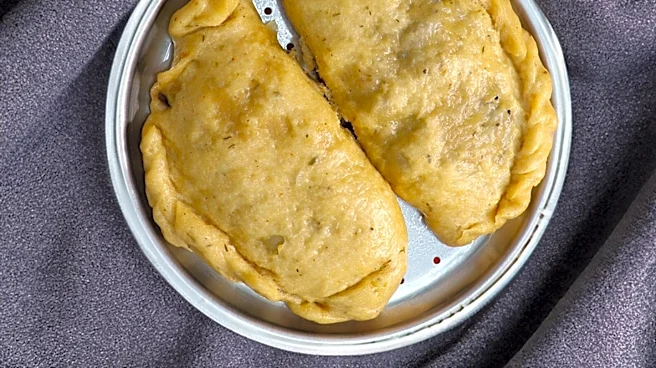
The Spanish Bakery & Café in St. Augustine, Florida, is struggling to keep up with the demand for its handmade empanadas, particularly due to a surge in tourism and social media attention. Bakery manager Carol Miller noted that trays of 16 empanadas can
sell out within an hour on busy days. The bakery, which has been operating since 1965, makes all its empanadas by hand, from dough to pressing. While a new rolling machine has reduced the production time for 160 empanadas from eight hours to four, demand continues to outpace supply. Tourists often discover the bakery through news coverage, TikTok, and Instagram, drawn by its location in St. Augustine's historic district and its connection to Spanish culture. The bakery also highlights that its empanadas are baked, offering a healthier alternative to traditional fried versions, which is particularly appealing during Florida's warmer months.
Why It's Important?
This phenomenon illustrates the significant impact of social media and tourism on local businesses, particularly in the food industry. The 'craze' for a specific food item can rapidly elevate a small establishment to widespread popularity, leading to both opportunities and operational challenges. For St. Augustine, a city rich in history, the bakery's success underscores how authentic cultural experiences, even through food, can become major tourist attractions. The shift from traditional word-of-mouth to digital platforms like TikTok and Instagram as primary drivers of customer traffic highlights evolving consumer behavior and marketing dynamics. The bakery's emphasis on its baked empanadas also reflects a growing consumer preference for healthier food options, even within the realm of comfort food, influencing menu development and marketing strategies for other food businesses.
What's Next?
The Spanish Bakery & Café will likely continue to face the challenge of scaling production to meet surging demand while maintaining its handmade quality. This could lead to decisions about further automation, expansion, or strategic marketing to manage customer expectations. Other local businesses in tourist-heavy areas may observe this trend and adapt their own strategies to leverage social media and cater to tourist preferences. The success of baked empanadas could also inspire other eateries to offer healthier versions of traditional dishes. For St. Augustine, the bakery's popularity contributes to its identity as a culinary destination, potentially attracting more food-focused tourism. The ongoing influence of social media platforms on consumer trends will continue to shape the landscape for small businesses.
Beyond the Headlines
The story of the Spanish Bakery & Café delves into the broader implications of authenticity and cultural heritage in the modern consumer landscape. In an era of mass production, the bakery's commitment to handmade products, rooted in Spanish tradition, resonates deeply with consumers seeking unique and genuine experiences. This highlights a growing appreciation for artisanal craftsmanship and cultural storytelling in food. The 'healthier' baked option also speaks to a societal shift towards wellness, where even indulgent treats are scrutinized for their nutritional profile. Furthermore, the rapid viral spread of information through social media platforms like TikTok demonstrates a democratization of influence, where individual experiences can quickly translate into significant economic impact for small businesses, bypassing traditional advertising channels. This creates both immense opportunities and pressures for businesses to adapt to an ever-changing digital environment.