









What's Happening?
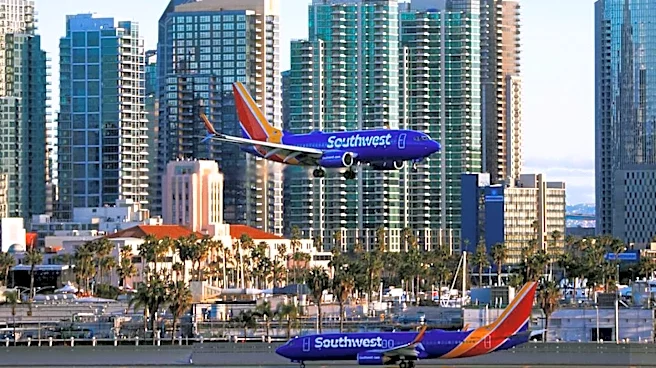
Southwest Airlines has taken the unprecedented step of shipping jet fuel from Texas to California by boat due to supply concerns. This decision was made in response to high fuel prices and supply constraints on the West Coast. The shipment, which traveled
from Houston through the Panama Canal to Los Angeles, delivered approximately 12.6 million gallons of jet fuel. This move was facilitated by a waiver of the Jones Act, allowing the use of non-U.S. ships for domestic transport. The waiver was granted by President Trump in March amid rising fuel prices following geopolitical tensions with Iran.
Why It's Important?
The decision by Southwest Airlines to transport jet fuel by sea highlights the volatility and challenges facing the fuel market, particularly in regions reliant on imports. This action underscores the airline industry's vulnerability to geopolitical events and supply chain disruptions. The increased fuel costs have significant implications for airline operations, as fuel is a major expense. Southwest's proactive approach to securing fuel supply demonstrates the importance of strategic planning in maintaining operational stability. This situation may prompt other airlines to consider alternative fuel sourcing strategies to mitigate risks associated with supply shortages.
What's Next?
As fuel prices continue to fluctuate, airlines may explore further measures to ensure supply security, including diversifying fuel sources and investing in fuel-efficient technologies. The industry may also advocate for policy changes to facilitate more flexible fuel transport options. Stakeholders, including government agencies and fuel suppliers, will likely engage in discussions to address the underlying causes of supply constraints and explore solutions to stabilize the market. The ongoing geopolitical tensions with Iran may continue to impact fuel prices and availability, necessitating ongoing monitoring and adaptation by airlines.
Beyond the Headlines
The reliance on fuel imports and the impact of geopolitical events on supply chains highlight broader issues of energy security and market stability. This situation may drive discussions on the need for more resilient infrastructure and policies to support domestic fuel production and distribution. The airline industry's response to these challenges could influence broader energy policy and investment decisions, potentially leading to increased focus on renewable energy sources and sustainable fuel alternatives.