




What's Happening?
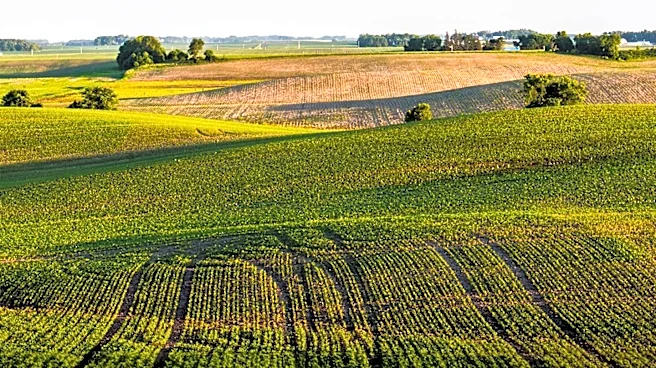
Ohio farmland values increased by just over 10% in the past year, according to Farm Credit Mid-America's latest benchmark study. This growth rate is slower compared to previous years, though it still outpaces the 7% increase observed across the organization's
broader five-state territory, which includes Indiana, Kentucky, Tennessee, and parts of Arkansas. The market is experiencing a more cautious approach from buyers, leading to properties spending slightly longer on the market. While traditional agricultural producers, such as row-crop and cattle operations, remain active, they are now competing with a more diverse pool of buyers interested in residential development, recreational properties, and other commercial uses. This increased demand, coupled with a limited supply of quality farmland, continues to drive prices up, particularly in desirable areas like Northeast Ohio, which saw a 17.6% increase in farmland values over the last year. However, the overall pace of appreciation has moderated, reflecting a market where buyers are conducting more thorough due diligence before making significant investments.
Why It's Important?
The slowing, yet still positive, growth in Ohio's farmland values signals a shift in the agricultural real estate market, impacting both farmers and investors. For agricultural producers, this trend necessitates a more strategic approach to expansion and investment. Tighter margins due to commodity prices and production costs mean farmers are more selective about land purchases, focusing on productivity and operational efficiency. The increasing competition from non-agricultural buyers for residential, recreational, and commercial development also highlights the evolving landscape of land use in Ohio. This diversification of demand can inflate land prices beyond what traditional farming operations can sustain, potentially pushing some farmers out of the market or limiting their ability to expand. The cautious buyer behavior suggests a maturing market, where speculative purchases may be less prevalent, and long-term value and utility are prioritized. This dynamic is crucial for the long-term economic viability of farming in the state and the preservation of agricultural land.
What's Next?
The Ohio farmland market is expected to continue its trend of localized variations, with significant differences in value between counties and even individual properties based on factors like location, productivity, and buyer interest. Farmers looking to expand will need to prioritize preparation, clearly defining their operational needs and financial capacity before opportunities arise. The increased time properties spend on the market indicates that while demand remains strong, the frenzied pace of quick sales seen in previous years is subsiding. This could offer a window for more deliberate decision-making for potential buyers. The ongoing competition from diverse buyer groups suggests that non-agricultural influences will continue to play a significant role in shaping farmland values. Stakeholders, including agricultural organizations and policymakers, may need to consider strategies to support traditional farming operations in the face of rising land costs and diversified demand, ensuring the continued strength of Ohio's agricultural sector.
Beyond the Headlines
The evolving farmland market in Ohio reflects broader economic and demographic shifts impacting rural America. The influx of non-agricultural buyers for residential and recreational purposes underscores a growing trend of urbanization and exurbanization, where populations are expanding beyond traditional metropolitan centers. This can lead to increased land fragmentation and conversion of agricultural land to other uses, posing long-term challenges for food security and environmental sustainability. The emphasis on 'location, location, location' and the increasing localization of farmland values suggest that proximity to urban centers or desirable natural amenities is becoming a more dominant factor than purely agricultural productivity. This could lead to a two-tiered market, where highly productive agricultural land in remote areas might struggle to compete with less productive land closer to development hubs. The need for farmers to be more selective and conduct thorough homework before investing also points to the increasing complexity of agricultural finance and risk management in a dynamic market.