



What's Happening?
Hyundai Motor America has sold its entire equity stake in Aurora Innovation, a U.S. autonomous driving technology company. This divestment, which involved 4,698,633 shares (0.22% equity stake) for approximately 29.8 billion won, resulted in a valuation
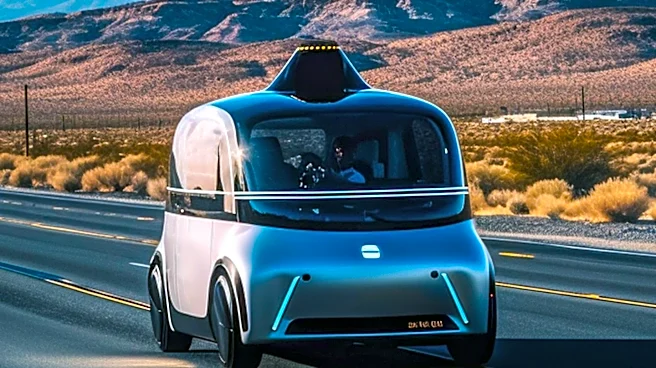
gain or loss of 3.9 billion won. The decision comes seven years after Hyundai Motor initially invested in Aurora to secure autonomous driving technology, following a strategic partnership established at CES 2018. Hyundai had previously planned to integrate Aurora's autonomous driving system into its Nexo hydrogen electric vehicle and aimed to unveil a Level 4 autonomous driving vehicle by 2021. However, Hyundai Motor Group is now accelerating the development of its own end-to-end autonomous driving solution, Atria AI, through its acquired company 42dot, signaling a shift towards in-house technological advancement.
Why It's Important?
This move signifies a strategic pivot for Hyundai Motor America, emphasizing self-reliance in the rapidly evolving autonomous driving sector. By divesting from Aurora, Hyundai is consolidating its resources and efforts into its proprietary technology, potentially leading to more integrated and customized solutions for its vehicle lineup. This shift could impact the competitive landscape of autonomous vehicle development in the U.S., as major automotive manufacturers increasingly seek to control their core technologies. For consumers, this could mean future Hyundai vehicles will feature autonomous driving systems developed entirely within the Hyundai ecosystem, potentially offering unique functionalities or a distinct user experience. The decision also highlights the challenges and complexities of external partnerships in high-tech automotive development, where companies may ultimately prioritize internal capabilities to maintain control and differentiation.
What's Next?
Hyundai Motor Group is expected to continue investing heavily in its in-house autonomous driving solution, Atria AI, developed through 42dot. This will likely involve further research, development, and testing to integrate the technology into future vehicle models. The company's focus will be on achieving Level 4 autonomous driving capabilities, allowing vehicles to operate without driver intervention in designated areas. This strategic direction suggests that future Hyundai vehicles in the U.S. market will feature autonomous driving systems that are deeply integrated with the company's hardware and software platforms. The success of Atria AI will be crucial in determining Hyundai's competitive position against other automotive manufacturers and dedicated autonomous driving technology companies.
Beyond the Headlines
Hyundai's decision to move away from external partnerships like Aurora and focus on in-house development reflects a broader trend in the automotive industry. Many major players are realizing the critical importance of owning and controlling the intellectual property for core technologies like autonomous driving. This approach allows for greater flexibility, faster iteration, and better integration with existing vehicle architectures. However, it also entails significant investment and risk. The long-term implications could include a more fragmented autonomous driving landscape, where different manufacturers offer distinct, proprietary systems rather than relying on a few dominant third-party providers. This could lead to increased competition and innovation, but also potential compatibility challenges and varying levels of performance across different brands.