





What's Happening?
Rene Haas, CEO of Arm Holdings, has stated that demand for the company's chip technology is exceptionally high, describing it as 'off the charts.' Despite this robust demand, Arm is facing significant production bottlenecks, primarily due to the physical
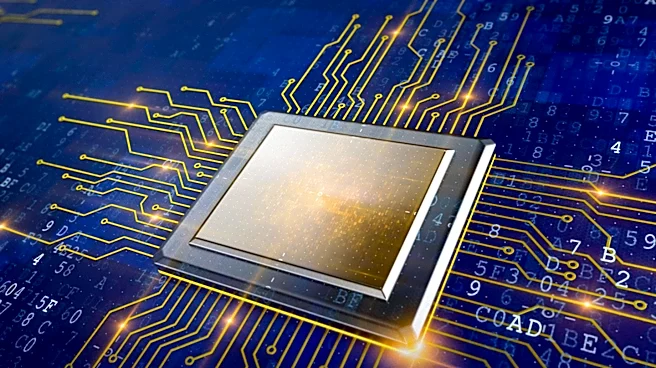
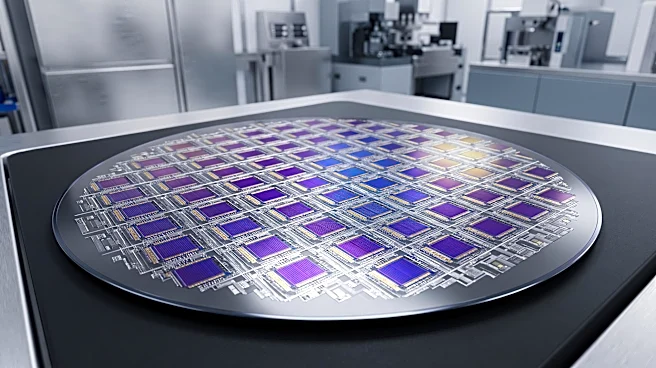
inability to manufacture enough silicon to meet orders. The demand for Arm's AI-focused AGI CPU alone has doubled from $1 billion in March 2026 to over $2 billion by May 2026. Haas identified specific chokepoints in the production pipeline, including TSMC wafers, memory, substrates, and test equipment. These constraints are not easily resolved and are expected to persist for several years before gradually easing. Arm has maintained a conservative revenue target of $1 billion for the AGI CPU, despite the much higher visible demand, reflecting the severity of these supply limitations. The company is also expanding its focus beyond traditional licensing to selling complete chip architectures, particularly for data centers, robotics, and automotive applications, which Haas expects to become significant growth areas.
Why It's Important?
The situation at Arm Holdings highlights a critical challenge within the global semiconductor industry: the struggle to meet surging demand for advanced chips, especially those vital for artificial intelligence. This supply-demand imbalance has broad implications for U.S. industries reliant on these components, including technology, automotive, and data center sectors. For Arm, the inability to produce enough chips means foregone revenue and potential delays in market penetration for its new complete chip architectures. For customers, it translates to higher costs, longer lead times, and potential slowdowns in innovation and product development. The shift by Arm to selling complete chip architectures, rather than just licensing designs, is a strategic move to capture a larger share of the value chain, particularly in the energy-efficient data center market. This could reshape competition within the semiconductor landscape, benefiting Arm but potentially increasing reliance on its specific solutions for companies seeking energy-efficient AI processing.
What's Next?
Arm Holdings will continue to navigate a challenging supply-constrained environment, with CEO Rene Haas expecting the bottlenecks to persist for years. The company is working with partners to expand manufacturing capacity, particularly for its AGI CPU, to support the $1 billion revenue opportunity and eventually meet the over $2 billion in demand. Investors will be closely watching for any improvements in the supply chain, as every incremental increase in manufacturing capacity directly translates to revenue for Arm. The success of Arm's pivot towards selling complete chip architectures, especially in the data center segment, will be a key indicator of its future growth. The company's ability to deliver on its promises and overcome production hurdles will determine whether it can capitalize on the 'off the charts' demand and solidify its position in the rapidly evolving AI and semiconductor markets.
Beyond the Headlines
The persistent supply constraints faced by Arm Holdings underscore a deeper vulnerability in the global technology ecosystem: the fragility of the semiconductor supply chain. This situation highlights the need for greater resilience and diversification in chip manufacturing, potentially leading to increased investment in domestic production capabilities in the U.S. and other regions. The strategic pivot by Arm to offer complete chip architectures, moving beyond its traditional licensing model, signifies a fundamental shift in its business strategy. This could lead to increased competition with established chip manufacturers and potentially alter the dynamics of the semiconductor industry, where energy efficiency is becoming a paramount purchasing criterion, especially in data centers. The long-term implications include a potential acceleration of AI adoption as more efficient hardware becomes available, but also a continued struggle for industries to secure the necessary components for their technological advancements.