







What's Happening?
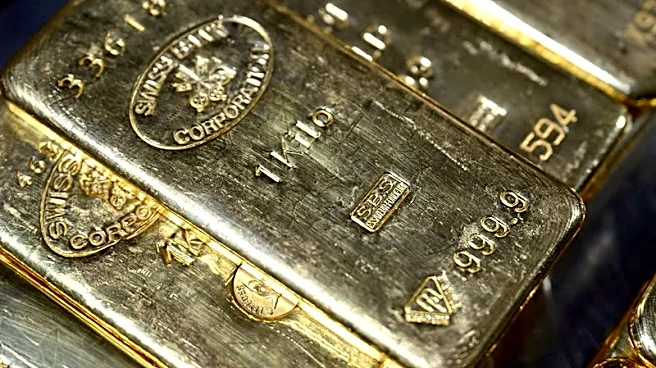
Gold's spot price has decreased to $4,246.29 per ounce as of 9:00 a.m. ET, down from $4,333.19 per ounce the previous day. This decline comes amid ongoing economic and political turmoil, which typically drives investors towards gold as a safe-haven asset.
Gold is valued for its reliability as a store of value and its ability to hedge against inflation, making it a popular choice during market downturns. Despite its lack of dividends compared to traditional investments, gold remains a favored option for portfolio diversification. Investors can engage with gold through various means, including physical purchases, gold IRAs, and exchange-traded funds (ETFs). Each method offers different benefits and costs, such as storage fees and account setup charges, which vary depending on the provider.
Why It's Important?
The fluctuation in gold prices reflects broader economic uncertainties that influence investor behavior. As a traditional safe-haven asset, gold's appeal increases during periods of market instability, providing a hedge against inflation and currency devaluation. This trend highlights the ongoing concerns about global economic conditions, including inflationary pressures and geopolitical tensions. For investors, the current environment underscores the importance of diversifying portfolios to mitigate risks associated with volatile markets. The decline in gold prices may also impact related industries, such as mining and retail, which rely on stable or rising gold prices for profitability. Additionally, financial institutions offering gold-related investment products may see shifts in demand as investors adjust their strategies in response to market conditions.
What's Next?
Investors and financial analysts will likely continue to monitor economic indicators and geopolitical developments that could influence gold prices. Potential interest rate changes by central banks, inflation trends, and international conflicts are key factors that could affect market dynamics. As investors seek to protect their assets, the demand for gold and other safe-haven investments may persist, influencing financial markets and investment strategies. Companies involved in gold production and trading will need to adapt to these market conditions, potentially adjusting their operations and financial forecasts. Additionally, regulatory changes or shifts in monetary policy could further impact the gold market, prompting investors to reassess their positions.