





What's Happening?
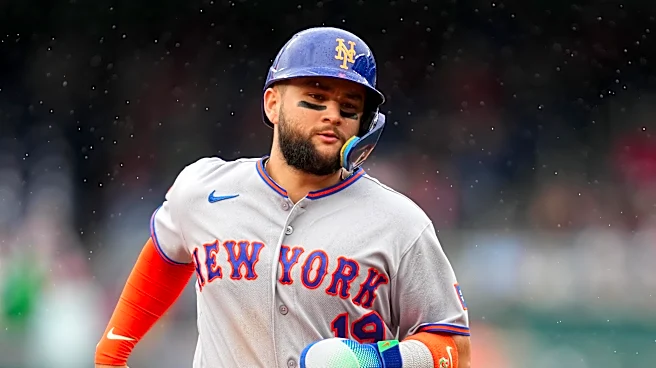
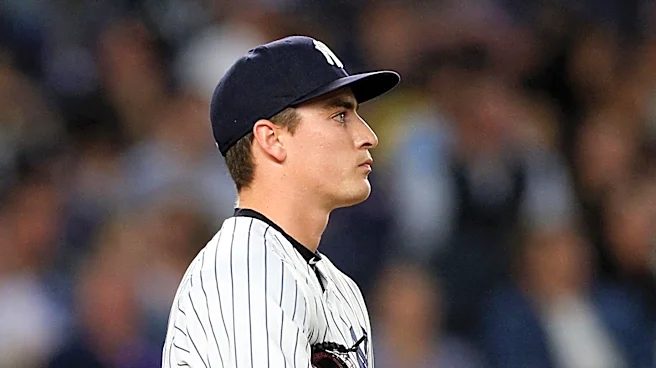
Clay Holmes, a pitcher with previous experience playing for both the New York Mets and New York Yankees, has become a free agent after declining his player option with the Chicago Cubs. Holmes' departure from the Cubs comes after a short nine-game stint
following his acquisition from the Mets at the trade deadline. Despite a fractured fibula limiting him to 18 starts, Holmes finished the season with a 3.29 ERA, 1.19 WHIP, and 78 strikeouts across 101.1 innings. Both New York franchises are entering the offseason with significant questions after disappointing seasons, making Holmes an intriguing option for either club. The Cubs will have an exclusive negotiating window with Holmes, but he is expected to explore offers from multiple teams.
Why It's Important?
Holmes' availability as a free agent presents a significant opportunity for both the Mets and Yankees to address their pitching needs. Both teams are looking to improve their rosters after failing to meet expectations, with the Mets missing the postseason for the second consecutive year and the Yankees experiencing an early playoff exit. Holmes has a proven track record, particularly as a high-leverage reliever with the Yankees and a successful transition to a starting role with the Mets in 2025. His return to New York could provide much-needed stability to either team's rotation or bullpen. The competition for Holmes' services will highlight the strategic decisions both organizations must make to rebuild and contend in the upcoming season, impacting their financial commitments and roster construction.
What's Next?
The Chicago Cubs will have an exclusive negotiating window with Clay Holmes, but he is widely expected to reach free agency and entertain bids from various clubs. Both the New York Mets and New York Yankees are considered potential suitors for Holmes, given their past connections and current pitching needs. The Mets, in particular, could benefit from additional rotation stability after their recent disappointing seasons. Holmes' decision will likely be influenced by contract offers, role expectations, and the competitive outlook of interested teams. His signing will be a key development in the MLB offseason, potentially shaping the pitching landscape for one of the New York franchises.
Beyond the Headlines
The situation with Clay Holmes underscores the dynamic and often unpredictable nature of player movement in professional baseball. His short tenure with the Cubs after being traded from the Mets highlights how quickly player valuations and team needs can change. The fact that both New York teams, despite their recent struggles, are considered potential destinations for Holmes speaks to the enduring appeal and resources of these major market franchises. This scenario also illustrates the strategic complexities of team management, where organizations must constantly evaluate talent, manage contracts, and adapt to evolving market conditions to remain competitive. The outcome of Holmes' free agency will not only impact his career but also serve as a barometer for the strategic direction of the teams vying for his services.