








What's Happening?
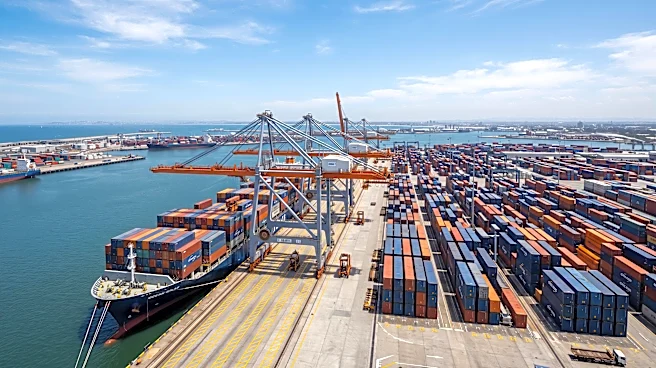
The International Finance Corporation (IFC), a member of the World Bank Group, and Citibank, N.A. (Citi) have partnered to establish a new trade finance facility totaling up to $2 billion. This initiative aims to expand access to financing for corporate
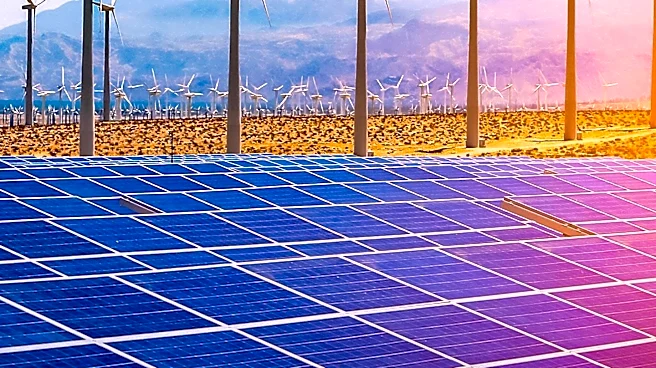
and small and medium-sized enterprises (SMEs) in emerging markets across Africa, Asia, and Latin America. Under the agreement, IFC will provide guarantees of up to $1 billion to Citi, which will then commit an equivalent amount, creating the combined facility. Over the next three years, this facility is projected to support more than 100 companies. A significant portion of Citi's commitment, at least $500 million, will be directed towards businesses in sectors with climate benefits, including water and sanitation infrastructure, renewable energy, energy-efficient manufacturing, and sustainable agriculture. This partnership addresses the substantial global trade finance gap, estimated at $2.5 trillion, which disproportionately affects developing economies by limiting their access to affordable financing.
Why It's Important?
This collaboration is crucial for strengthening supply chains and fostering economic growth in emerging markets, where businesses often face significant barriers to obtaining trade finance. By acting as a risk partner, IFC enables Citi to extend its reach to a broader range of companies that are vital for job creation and economic activity. The focus on climate-beneficial sectors also aligns with global sustainability goals, promoting green investments and supporting the transition to a low-carbon economy in these regions. For the U.S., this initiative, while primarily targeting emerging markets, underscores the role of major U.S. financial institutions like Citi in global development and stability. A more robust global trade environment, facilitated by such partnerships, can indirectly benefit U.S. businesses through expanded markets and more stable supply chains. The initiative also highlights the ongoing challenge of the trade finance gap and the innovative approaches being taken to address it.
What's Next?
The facility is set to operate initially across multiple countries in Africa, Asia, and Latin America, with plans for further expansion. The success of this initiative could serve as a model for other global banks to adopt similar risk-participation frameworks, potentially multiplying the impact on the global trade finance gap. The IFC and Citi will monitor the deployment of funds and the impact on supported businesses, particularly those in climate-related sectors. This partnership builds on a long-standing relationship between the two institutions, which have collectively financed approximately $65 billion in emerging markets trade since 2006. Future developments will likely involve assessing the effectiveness of the climate-focused lending and exploring opportunities to scale up the program or replicate its structure in other regions or with additional financial partners.
Beyond the Headlines
The partnership between the World Bank Group and Citi goes beyond simply providing capital; it represents a strategic effort to de-risk lending in challenging markets, thereby unlocking private sector investment for development. The emphasis on climate-beneficial sectors reflects a growing recognition that economic development and environmental sustainability are intertwined, particularly in vulnerable emerging economies. This initiative could foster a new wave of green industrialization in these regions, creating jobs and building resilience against climate change impacts. Furthermore, by strengthening local businesses and supply chains, it could reduce reliance on concentrated global supply sources, contributing to a more diversified and stable global economy. The long-term implications include potentially reducing poverty, improving living standards, and fostering greater financial inclusion in some of the world's most underserved markets.