




What's Happening?
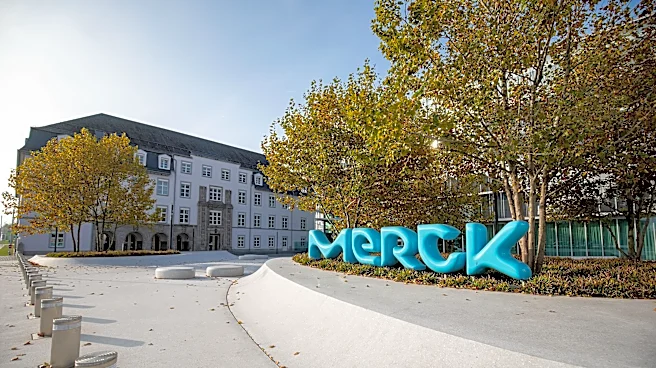
Merck & Co., Inc., known as Merck & Co., Inc. in the U.S., Canada, and Puerto Rico, and MSD elsewhere, has seen its shares trade at US$134, marking a 40.8% gain over the past year. This surge occurs despite a mixed financial performance in Q3 2026, where revenue
increased to US$18,085 million from US$17,276 million a year prior, but net income excluding extras declined from US$5,785 million to US$5,065 million. Consequently, the net margin decreased from 33.5% to 28.0%. Analysts are divided on the company's fair value, with some bullish projections based on significant U.S. investments and numerous product launches, while more cautious views highlight pressures from drug pricing and the impending loss of exclusivity for KEYTRUDA. The company's strategy involves converting its oncology and cardiometabolic pipeline into sustainable earnings, alongside focusing on specialty medicines in cancer, immune conditions, and brain health.
Why It's Important?
The performance of a major pharmaceutical company like Merck & Co. has significant implications for the U.S. healthcare sector and the broader economy. The debate among analysts regarding Merck's fair value underscores the inherent risks and opportunities within the pharmaceutical industry, particularly concerning drug development, patent expirations, and market competition. A strong stock performance, even with declining net margins, can attract further investment into the sector, potentially fueling research and development for new treatments. Conversely, concerns over drug pricing and loss of exclusivity for key products like KEYTRUDA highlight challenges that could impact future profitability and innovation. The company's ability to diversify its product portfolio and manage these pressures will be crucial for its long-term stability and its contribution to medical advancements in the U.S. and globally.
What's Next?
Merck's immediate future will likely involve continued efforts to integrate its broad late-stage pipeline and recent product launches, such as LIPFENDRA, WINREVAIR, sac TMT, and tulisokibart, into a diversified growth engine. This strategy aims to offset the concentration risk associated with KEYTRUDA and mitigate the impact of upcoming generic pressures across its portfolio. The company is also expected to continue heavy spending on research, early-stage deals, and managing legal settlements, with the expectation that these investments will secure future cash flow. Investors and analysts will closely monitor whether revenue, absolute profit, and net margin move in a consistent positive direction, indicating the success of Merck's strategic initiatives in converting sales into lasting earnings power amidst a challenging pharmaceutical landscape.
Beyond the Headlines
The ongoing narrative surrounding Merck & Co.'s valuation and future prospects extends beyond mere financial metrics, touching upon critical ethical and societal dimensions within the pharmaceutical industry. The reliance on high-margin treatments and the potential impact of loss of exclusivity for blockbuster drugs like KEYTRUDA raise questions about sustainable innovation models and access to affordable medicines. The company's substantial investments in oncology and cardiometabolic pipelines, alongside specialty medicines, reflect a broader industry trend towards addressing complex diseases. However, the tension between maximizing shareholder value and ensuring public health needs remains a central theme. The outcome of Merck's strategic bets will not only shape its financial trajectory but also influence the landscape of drug development, pricing strategies, and patient access to life-saving treatments in the U.S. and worldwide.