





What's Happening?
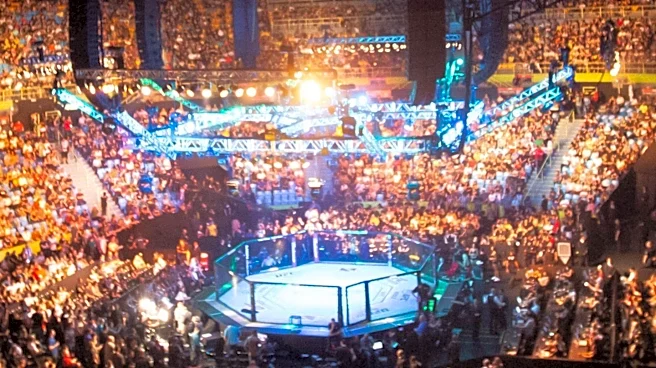
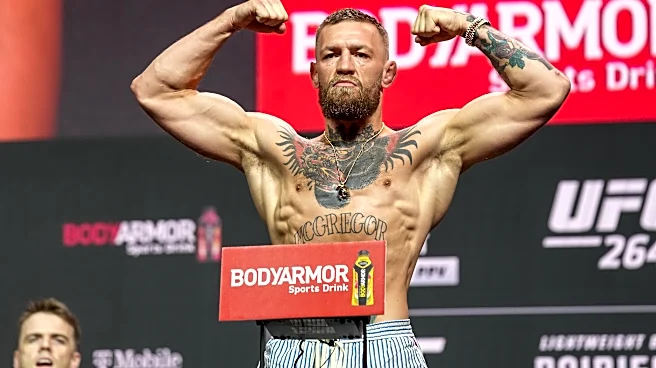
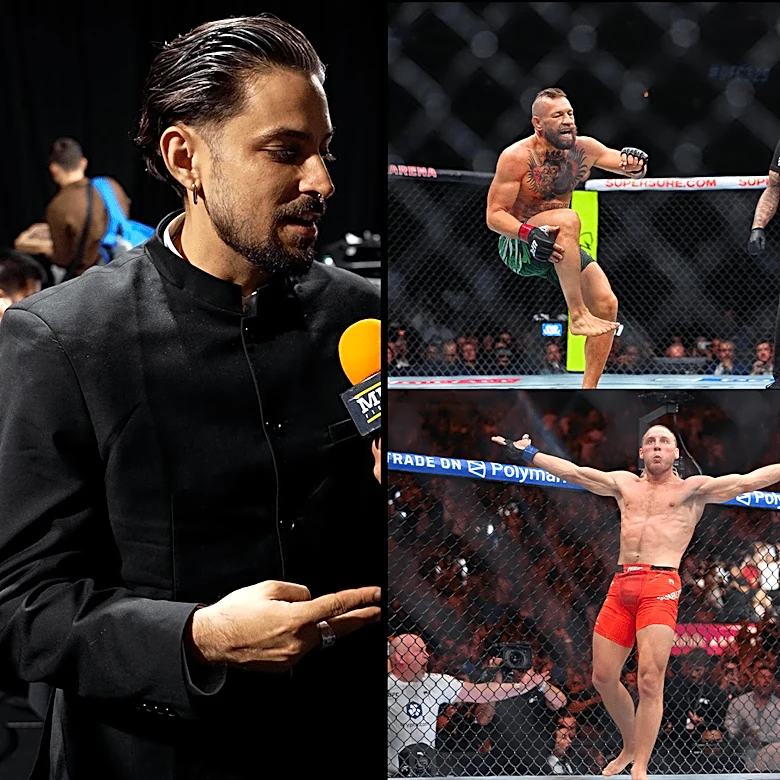
Conor McGregor's highly anticipated return to the UFC octagon ended abruptly due to a knee injury during his fight against Max Holloway at UFC 329 in Las Vegas. The match, which marked McGregor's first fight in over five years, concluded just 1:09 into
the first round. McGregor attempted a flying left roundhouse kick at the start of the bout but landed awkwardly on his right knee, leading to a suspected ACL injury. Despite his efforts to continue, it became evident that McGregor could not proceed with the scheduled five-round welterweight bout. Max Holloway, who was favored to win, secured the victory as McGregor was unable to continue.
Why It's Important?
The injury and subsequent loss mark a significant setback for Conor McGregor, who was attempting a comeback after a lengthy hiatus from the sport. McGregor's return was highly anticipated by fans and the UFC community, and his inability to complete the fight raises questions about his future in mixed martial arts. The outcome also reinforces Max Holloway's standing in the welterweight division, potentially setting him up for more high-profile matches. For the UFC, McGregor's injury could impact future event planning and marketing strategies, as he remains one of the sport's most recognizable figures.
What's Next?
The immediate concern for Conor McGregor will be the extent of his knee injury and the recovery process. If the injury is confirmed to be a torn ACL, McGregor could face a lengthy rehabilitation period, delaying any potential return to the octagon. For Max Holloway, the victory may open opportunities for title contention or other significant fights within the division. The UFC will likely monitor McGregor's recovery closely, as his presence in the sport significantly influences viewership and revenue.