





What's Happening?
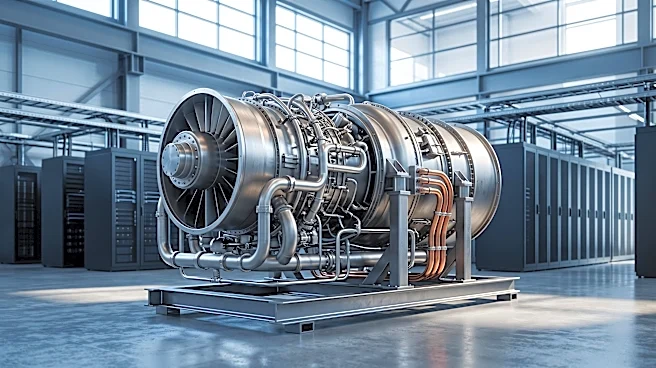
AI data centers in the United States are increasingly turning to repurposed jet engines, converted into gas turbines, to meet their escalating electricity demands. This trend is a direct response to significant delays in connecting to the electrical grid
and obtaining new gas turbines. The International Energy Agency (IEA) projects that global data center electricity consumption will nearly double from 485 TWh in 2025 to approximately 950 TWh by 2030, with AI-focused data centers tripling their consumption in the same period. Companies like Elon Musk’s xAI have already installed such systems, with eight turbines in Mississippi powering its Colossus 2 data center in Memphis. Another company, Crusoe, has ordered 13 PE6000 turbine generator units, each rated at 50 MW, from ProEnergy, totaling 650 MW for future large-scale AI data center projects. This approach leverages aeroderivative gas turbine technology, adapting existing aircraft engine designs for industrial power generation, offering faster deployment compared to traditional grid expansion.
Why It's Important?
The adoption of repurposed jet engines for data center power signifies a critical shift in how the U.S. is addressing the energy demands of its rapidly expanding AI infrastructure. This innovation allows for quicker deployment of data centers, bypassing the lengthy timelines associated with grid connections and new turbine manufacturing. However, this solution also presents trade-offs. While it offers a pragmatic short-term fix for power shortages, these converted systems may operate at lower efficiency, consume more fuel, and produce higher levels of air pollutants compared to dedicated modern natural gas power plants. This raises concerns about environmental impact and long-term sustainability, potentially conflicting with broader clean energy goals. The reliance on such solutions underscores the urgency for more robust and sustainable energy infrastructure development to keep pace with technological advancements in AI, highlighting that energy availability is now a decisive factor in the global AI race.
What's Next?
The trend of utilizing repurposed jet engines is likely to continue as AI data center expansion outpaces traditional energy infrastructure development. Companies will continue to seek flexible and rapidly deployable power solutions to avoid project delays, as exemplified by Microsoft's withdrawal from a UK data center project due to grid connectivity issues. However, the environmental implications of these fossil fuel-based systems will likely draw increased scrutiny. This could lead to greater investment in research and development for more efficient and cleaner aeroderivative technologies, or a renewed push for integrating renewable energy sources and advanced energy storage solutions. Regulatory bodies may also consider new policies to balance the need for rapid AI infrastructure deployment with environmental protection, potentially incentivizing more sustainable on-site power generation methods or accelerating grid modernization efforts to accommodate the growing demand.
Beyond the Headlines
The reliance on repurposed jet engines for AI data centers highlights a broader societal challenge: the tension between rapid technological advancement and sustainable resource management. While innovation often focuses on developing new technologies, this case demonstrates the value of adapting existing resources to meet immediate needs. However, it also exposes the potential for 'greenwashing' if these solutions are not coupled with genuine efforts to reduce overall carbon footprints. The long-term implications include a potential increase in localized air pollution and a continued dependence on fossil fuels, which could undermine climate goals. This situation calls for a holistic approach that integrates energy planning with technological development, emphasizing not just the speed of deployment but also the efficiency, sustainability, and long-term environmental impact of energy solutions for the digital age. It also underscores the need for transparent reporting on energy consumption and emissions from data centers.