






What's Happening?
The Major League Baseball Players Association (MLBPA) has informed federal lawmakers of its support for prohibiting personalized athlete promotions within sports betting VIP programs. This development follows a congressional inquiry into how a video featuring
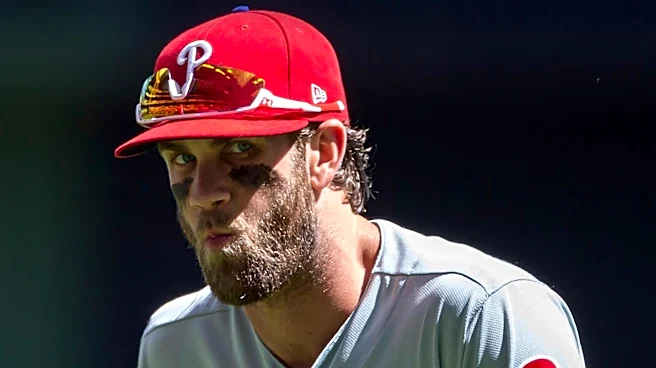
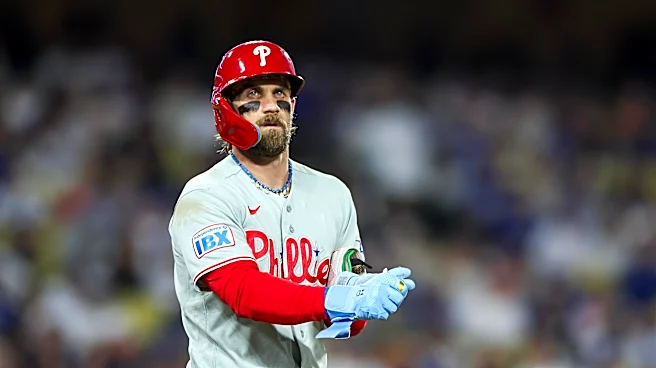
Philadelphia Phillies star Bryce Harper was obtained by a FanDuel customer struggling with a gambling addiction. The 21-second clip, recorded by Harper in 2024 via Cameo, was sent by a FanDuel VIP host to Terry Thompson, a Pennsylvania resident who had lost $1.5 million betting with the platform. Harper stated he was unaware the video would be used as a reward for a customer with a gambling problem. A lawsuit filed in March by the Public Health Advocacy Institute against FanDuel and DraftKings alleges that Thompson experienced suicidal thoughts due to his losses, accusing both operators of providing him VIP benefits. US Senator Richard Blumenthal and US Representatives Paul D. Tonko and Valerie P. Foushee sent letters to MLB, the MLBPA, and FanDuel on August 10, urging corrective actions and labeling FanDuel's VIP program as predatory.
Why It's Important?
This situation highlights growing concerns about the ethical implications of sports betting VIP programs and the entanglement of professional sports leagues with gambling companies. The MLBPA's willingness to incorporate VIP marketing restrictions into its collective bargaining agreement with MLB signals a potential shift in how athlete endorsements and fan engagement are managed in the context of sports gambling. The controversy underscores the vulnerability of individuals with gambling addictions and raises questions about the responsibility of betting operators and sports organizations to protect consumers. The financial ties between MLB franchises and betting providers, with 15 out of 30 MLB teams having sponsorship or partnership deals, further complicate the landscape, suggesting a systemic issue rooted in the deep integration of leagues, teams, and betting operators. This could lead to increased scrutiny from lawmakers and public health advocates, potentially prompting broader regulatory changes across the sports betting industry.
What's Next?
The MLBPA's General Counsel, Jeffrey Perconte, indicated that the union is prepared to submit proposals to close existing loopholes in their current agreement, which allows players to appear in advertisements for gambling entities as long as they don't promote betting on baseball itself. This suggests that future collective bargaining agreements between the MLBPA and MLB may include explicit restrictions on personalized VIP marketing. FanDuel, in its response to lawmakers, outlined its responsible gambling tools and stated that VIP account managers are salaried employees, not compensated based on customer betting volume. However, FanDuel did not address whether similar personalized videos had been sent to other customers. Pennsylvania state lawmakers are also working on legislation to restrict or eliminate sports betting VIP programs and in-game micro-betting, which the Sports Betting Alliance, representing major operators like FanDuel and DraftKings, plans to oppose. The Pennsylvania Gaming Control Board is also reviewing the Harper video incident.
Beyond the Headlines
The incident with Bryce Harper's video and the subsequent legislative and union responses reveal a deeper ethical dilemma within the rapidly expanding U.S. sports betting market. The use of personalized athlete messages as rewards for high-volume bettors, particularly those struggling with addiction, blurs the lines between fan engagement and potentially exploitative marketing tactics. This situation could trigger a broader re-evaluation of how sports leagues and betting companies balance revenue generation with social responsibility. It also brings to light the potential for athletes, even unknowingly, to be implicated in practices that harm vulnerable individuals. The push for stricter regulations on VIP programs and micro-betting reflects a growing societal concern about the normalization of gambling and its potential public health consequences, suggesting a long-term shift towards more stringent oversight of the industry's marketing and operational practices.