









What's Happening?
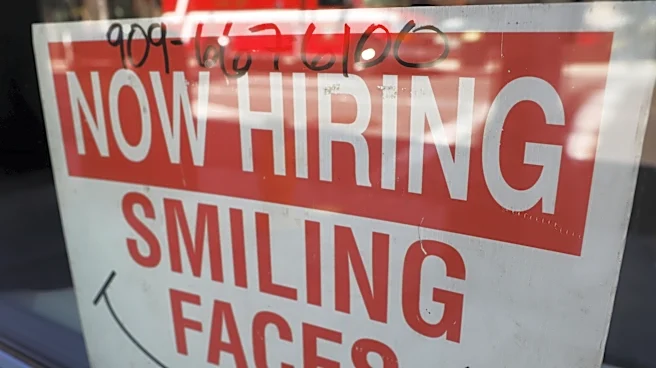
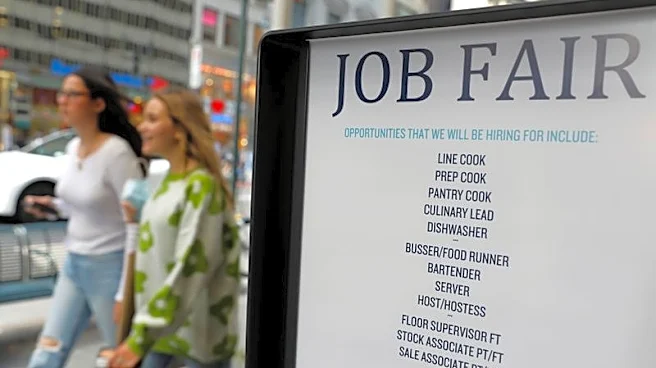
U.S. employers added 57,000 jobs in June, according to the Bureau of Labor Statistics, marking a slowdown in hiring compared to previous months. The unemployment rate eased to 4.2% from 4.3% in May, suggesting that the labor market remains on steady footing
despite the reduced pace of job creation. The report also included downward revisions for April and May, with a combined reduction of 74,000 jobs. This development comes as the Federal Reserve considers its interest rate policies, with a steady labor market potentially supporting arguments for rate hikes.
Why It's Important?
The slower job growth and persistent wage stagnation highlight ongoing challenges in the U.S. labor market. The discrepancy between wage growth and inflation suggests that workers' purchasing power is being eroded, which could impact consumer spending and overall economic growth. The health care sector, a significant driver of job growth, also saw a slowdown, adding only 22,000 jobs compared to its monthly average of 38,000. This trend could influence Federal Reserve policies, particularly regarding interest rates, as a steady labor market might support arguments for rate hikes to combat inflation.
What's Next?
Economists are closely monitoring the labor market for signs of further slowdown, especially as the summer months approach. The Federal Reserve may consider these employment figures in its upcoming policy decisions, potentially affecting interest rates. Businesses and policymakers will need to address the underlying issues in the labor market to prevent further erosion of consumer confidence and economic stability.