
What's Happening?
Ford is developing the Fathom electric truck, set to begin production in late 2027, with a strong emphasis on affordability, targeting a starting price of $29,945. A key innovation enabling this price point
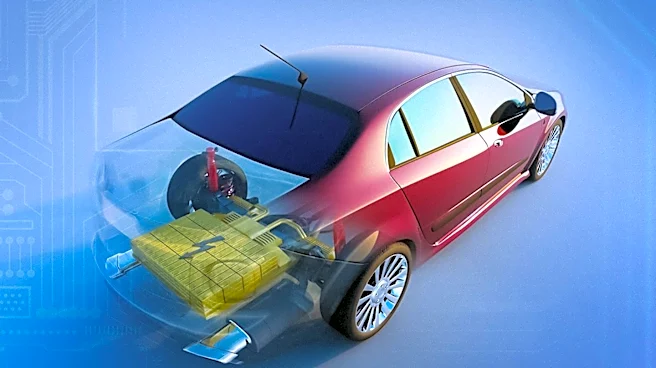
is the use of lithium iron phosphate (LFP) battery cells, which are significantly cheaper than the nickel manganese cobalt (NMC) cells commonly used in most U.S. EVs. While LFP cells are heavier and require more space for the same energy storage, Ford engineers have focused on efficiency improvements, such as reducing aerodynamic drag and tire rolling resistance, to minimize the battery pack size and cost. Furthermore, the Fathom's battery pack will serve a dual purpose: storing energy and acting as a structural component of the vehicle. This design allows the battery cells to carry up to 40 percent of the loads traveling through the truck, similar to stressed-member engines in high-performance cars. The battery pack will also form the floor of the passenger cabin, further reducing parts and assembly time.
Why It's Important?
This development by Ford signifies a strategic shift towards making electric vehicles more accessible and affordable in the U.S. market. By utilizing cheaper LFP battery technology and integrating the battery pack as a structural element, Ford aims to significantly reduce manufacturing costs, which could disrupt the current EV landscape dominated by higher-priced models. This approach could accelerate EV adoption by appealing to a broader consumer base seeking more economical options. The structural battery design also represents an engineering advancement, potentially leading to lighter, stiffer, and safer vehicles. This could influence future EV design and manufacturing processes across the industry, as other automakers may explore similar multi-functional component strategies to achieve cost efficiencies and performance improvements. The move also highlights Ford's commitment to in-house battery production at its Blue Oval Battery Park Michigan, strengthening its supply chain and control over critical EV components.
What's Next?
As production for the Ford Fathom electric truck is slated to begin in late 2027, the coming years will likely see further details emerge regarding its specifications, range, and market positioning. Ford will continue to refine its manufacturing processes at the Blue Oval Battery Park Michigan to scale LFP battery production efficiently. The success of the Fathom's affordable pricing strategy and its innovative structural battery design will be closely watched by competitors and consumers alike. If successful, this model could prompt other automakers to re-evaluate their battery chemistry choices and vehicle architecture, potentially leading to a broader industry trend towards LFP batteries and integrated structural components in EVs. The market will also observe consumer reception to the Fathom's performance and range, given the inherent trade-offs of LFP technology compared to NMC cells.
Beyond the Headlines
The Ford Fathom's approach to EV design, particularly its emphasis on affordability through LFP batteries and structural integration, could have long-term implications for the automotive industry's sustainability and innovation. By reducing reliance on more expensive and sometimes ethically contentious raw materials like nickel and cobalt, LFP batteries offer a more sustainable and cost-effective path for mass EV production. The structural battery concept challenges traditional automotive engineering by making a single component serve multiple critical functions, potentially leading to a paradigm shift in vehicle design that prioritizes efficiency and material optimization. This could foster a new era of innovation where components are designed for multi-functionality, reducing overall vehicle complexity, weight, and cost. Furthermore, Ford's investment in domestic battery manufacturing could bolster U.S. energy independence and create new jobs in the advanced manufacturing sector, contributing to broader economic and geopolitical shifts in the global automotive supply chain.