






What's Happening?
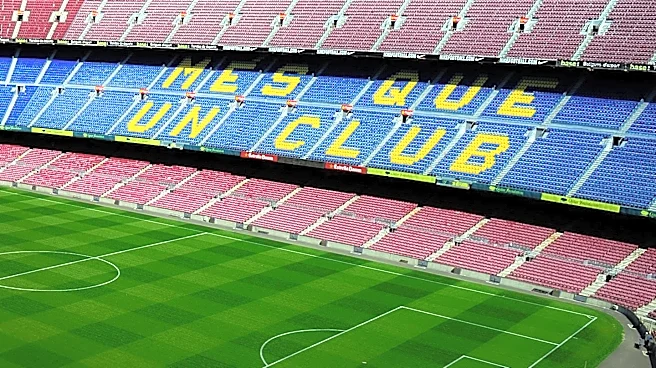
FC Barcelona's financial obligations are set to surpass €2 billion after the club's owning members approved a €500 million loan. This significant loan is primarily intended to finalize the reconstruction of their Camp Nou stadium. Approximately €300 million of this
new funding will be allocated to the stadium renovations, which aim to expand the venue's capacity to 105,000. The remaining portion of the loan will be directed towards covering operational costs. The total budget for the Camp Nou rebuild and the surrounding 'Espai Barça' project has now reached €1.8 billion, a substantial increase of over €1 billion from the initial estimates in 2014. Earlier this year, the club's credit rating was downgraded by Morningstar DBRS from 'positive' to 'stable' due to construction delays at Spotify Camp Nou. These delays necessitate a temporary relocation of the club to the Lluis Companys Olympic Stadium while crucial work on the stadium's top tier is completed.
Why It's Important?
This escalating debt for FC Barcelona highlights the immense financial pressures faced by major sports organizations undertaking large-scale infrastructure projects. While the club remains a significant entity in European football, ranking second in the Deloitte Football Money League, the substantial increase in debt could impact its long-term financial stability and operational flexibility. The credit rating downgrade reflects concerns about the project's financial management and timeline, potentially affecting future borrowing capabilities and investor confidence. For a fan-owned club, the financial burden directly impacts its members, who hold voting rights on key decisions. The need to allocate a portion of the loan to operational costs suggests ongoing financial strain beyond just the stadium project. This situation could influence the club's ability to invest in player transfers, maintain competitive salaries, and ultimately affect its performance on the field, which in turn impacts revenue streams from sponsorships, broadcasting rights, and merchandise.
What's Next?
FC Barcelona will proceed with the reconstruction of the Camp Nou stadium, utilizing the newly secured €500 million loan. The club is expected to temporarily relocate to the Lluis Companys Olympic Stadium to allow for the completion of the remaining works on Spotify Camp Nou. The focus will be on adhering to the revised construction timelines and managing the increased budget of €1.8 billion for the Espai Barça project. The club's leadership, including current president Joan Laporta, will need to navigate the financial implications of this expanded debt, potentially exploring new revenue streams or cost-cutting measures to mitigate the impact. The club's financial performance and its ability to meet revenue projections, which are expected to reach €1 billion this year and €1.2 billion by 2028, will be closely monitored by credit rating agencies and financial stakeholders. The success of the stadium project and the club's financial health will be crucial for its continued standing in global football.
Beyond the Headlines
The financial challenges faced by FC Barcelona extend beyond immediate debt figures, touching upon the broader economic model of elite football clubs. The reliance on massive loans for stadium development, even for a club with significant revenue, underscores the capital-intensive nature of maintaining top-tier sports infrastructure. This situation could prompt a re-evaluation of financial risk management strategies within the sports industry, particularly for fan-owned clubs where financial decisions are subject to member approval. The temporary relocation to another stadium could also impact fan experience, matchday revenues, and the club's brand identity during the construction period. Furthermore, the substantial debt could influence the club's transfer market strategy, potentially leading to a greater focus on youth development or more strategic, cost-effective player acquisitions. The long-term success of the Espai Barça project is not just about a new stadium but also about securing the club's financial future and competitive edge in an increasingly commercialized global sport.