







What's Happening?
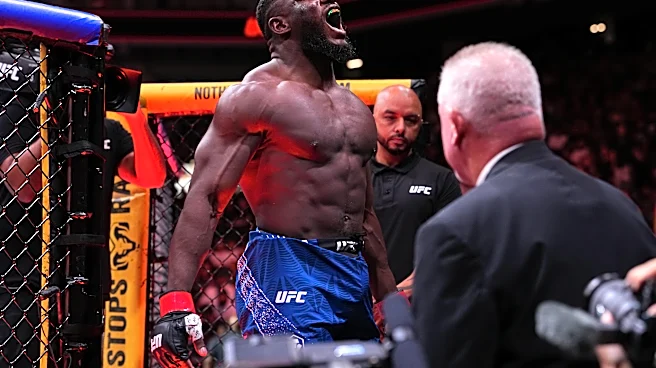
UFC fighter Kevin Holland has confirmed he is the unnamed athlete Dana White recently referred to as having earned over $11 million in the promotion, despite never fighting for a world title. White, the CEO of UFC, made the revelation during a post-fight
press conference for the Contender Series, highlighting the financial opportunities available to fighters who emerge from the program. Holland initially denied being the fighter in question on social media, stating, 'That fighter’s not me. Don’t listen to that s—t.' However, he later posted a video jokingly introducing himself as 'the $11 million man' and elaborated on his earnings, noting that personal expenses such as taxes, child support for four children, and three divorces significantly impact his net income. Holland's active fighting schedule, with 29 bouts since joining the UFC in 2018 and 10 post-fight bonuses, made him a prime candidate for White's description.
Why It's Important?
This revelation offers a rare glimpse into the financial realities of top-tier UFC fighters, particularly those who achieve significant earnings without reaching championship status. Dana White's initial statement aimed to showcase the financial success possible through the Contender Series, suggesting it as a viable pathway to substantial wealth in mixed martial arts. Holland's subsequent clarification, however, underscores the often-overlooked financial burdens and personal costs associated with a high-earning career in professional sports. His comments about taxes, child support, and divorces highlight that gross earnings do not equate to disposable income, providing a more nuanced perspective on fighter compensation. This insight is crucial for aspiring athletes and fans alike, as it demystifies the financial aspects of a UFC career and challenges the perception that multi-million dollar earnings automatically translate into long-term financial security.
What's Next?
The discussion around Kevin Holland's earnings is likely to fuel ongoing conversations about fighter pay and financial literacy within the UFC and the broader combat sports community. While Holland's comments were made in a somewhat jocular manner, they bring to light serious financial planning considerations for athletes. It may prompt other fighters to be more transparent about their financial situations or encourage the UFC to provide more resources for financial management. For Holland, his continued activity in the octagon and his willingness to take short-notice fights suggest he will remain a prominent figure, potentially further increasing his career earnings. The UFC may continue to use examples like Holland's to promote the Contender Series as a lucrative entry point, while critics might use his full disclosure to argue for greater transparency and better financial support systems for fighters.
Beyond the Headlines
Beyond the immediate financial figures, Holland's candid remarks touch upon broader societal issues concerning wealth, personal responsibility, and the public perception of high-earning individuals. The expectation that athletes, particularly those in high-profile sports, should be financially secure simply due to their large contracts often ignores the significant personal and professional expenses they incur. Holland's situation highlights the complex interplay between career success, personal life choices, and financial management. It also subtly critiques the 'rags-to-riches' narrative often promoted in sports, revealing that even substantial earnings can be quickly diminished by life's demands. This transparency could foster a more realistic understanding of athlete finances and encourage a more empathetic view of their challenges, moving beyond the simplistic notion of 'they make millions, so they must be rich.'