


What's Happening?
Jefferies analysts Laurence Alexander and Charles Boakye propose that China's uranium procurement strategy is driven by long-term geopolitical competition rather than standard inventory management. They suggest Beijing is accumulating uranium stockpiles
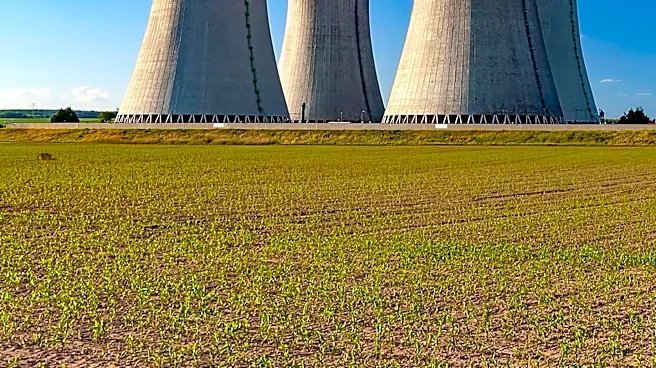
to support decades of nuclear expansion, aiming to safeguard its nuclear energy program against potential supply disruptions, sanctions, and geopolitical instability. China's operating nuclear capacity is estimated at 60 gigawatts, requiring 10,000 to 13,000 tonnes of uranium annually. This capacity is projected to reach 100 to 110 gigawatts by 2030 and 180 to 200 gigawatts by 2035, which would increase annual uranium requirements to 30,000 to 36,000 tonnes. The analysts believe a strategic objective could be to cover five to seven years of future demand, leading to inventory holdings of 200,000 to 250,000 tonnes of uranium, or potentially more under severe geopolitical stress.
Why It's Important?
This analysis highlights a significant shift in how China's energy strategy could impact global markets and geopolitical stability. If China is indeed stockpiling uranium for long-term strategic reasons, it could create a 'bullwhip effect' in the uranium market, leading to disproportionately large procurement responses from other nations. Western utilities might react by securing additional supplies, potentially driving up prices and encouraging producers to limit spot-market availability. This could affect the global supply chain for nuclear fuel, impacting energy security and operational costs for nuclear power plants worldwide, including those in the U.S. The low storage costs of uranium make such strategic stockpiling economically viable, raising questions about the true nature of current global uranium demand—whether it reflects actual reactor consumption or significant inventory accumulation by China.
What's Next?
The potential for a 'bullwhip effect' in the uranium market suggests that other nations, including the U.S., may need to re-evaluate their own uranium procurement and inventory strategies. Increased demand driven by strategic stockpiling could lead to higher uranium prices and a more competitive global market. This could prompt U.S. nuclear power operators to seek long-term contracts or explore domestic uranium production to ensure supply stability. Furthermore, the geopolitical implications of China's strategy could influence international relations and trade policies related to nuclear materials, potentially leading to new agreements or restrictions aimed at securing critical resources. The ongoing monitoring of China's purchasing patterns and global uranium market dynamics will be crucial for understanding future developments.
Beyond the Headlines
The deeper implications of China's alleged strategic uranium stockpiling extend beyond immediate market fluctuations. It underscores a broader trend of nations securing critical resources in anticipation of future geopolitical uncertainties and potential supply chain disruptions. This approach reflects a long-term view of national security and energy independence, where access to essential materials like uranium is seen as a strategic asset. The emphasis on protecting its nuclear energy program against sanctions and instability suggests a proactive measure to mitigate risks associated with international tensions. This could also accelerate the development of domestic uranium enrichment capabilities in other countries, including the U.S., as a means of reducing reliance on external suppliers and enhancing national resilience in the face of global competition.