





What's Happening?
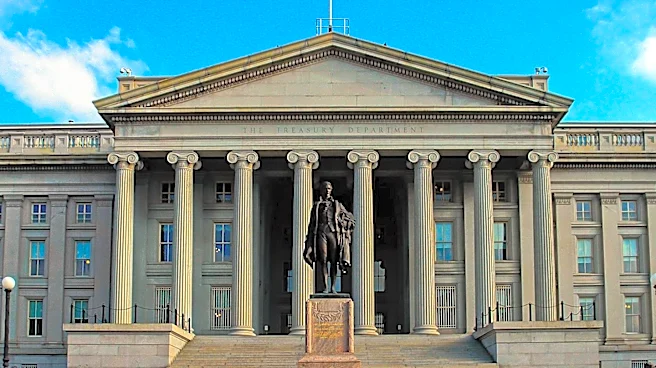
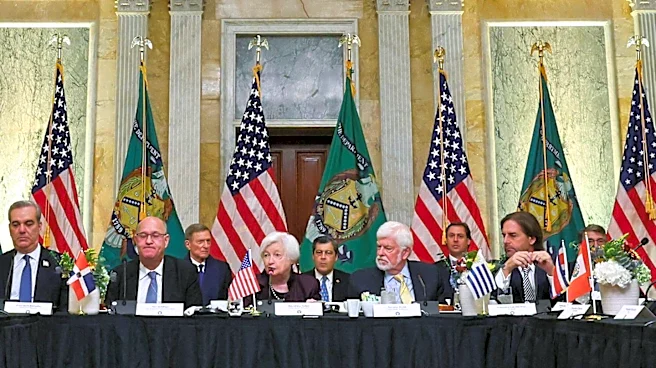
The Treasury Borrowing Advisory Committee (TBAC) has submitted a report to the Secretary of the Treasury, detailing a repricing of Treasury markets towards higher interest rates since early August. This shift is attributed to stronger U.S. economic activity,
persistent energy-supply disruptions, and the Federal Reserve's initial rate hike and projections for further increases. The report notes that two-year yields rose by approximately 50 basis points and ten-year yields by roughly 40 basis points, with ten-year yields peaking around 5.4% and thirty-year yields around 5.7% in early October before some reversal. Resilient household spending, strong investment in computing equipment, intellectual property, and data centers, and an infrastructure buildout have contributed to the stronger economic activity. The Federal Reserve responded to persistent inflation risks by raising its target range by 25 basis points to 3.75%–4.00% in September, with expectations for further increases.
Why It's Important?
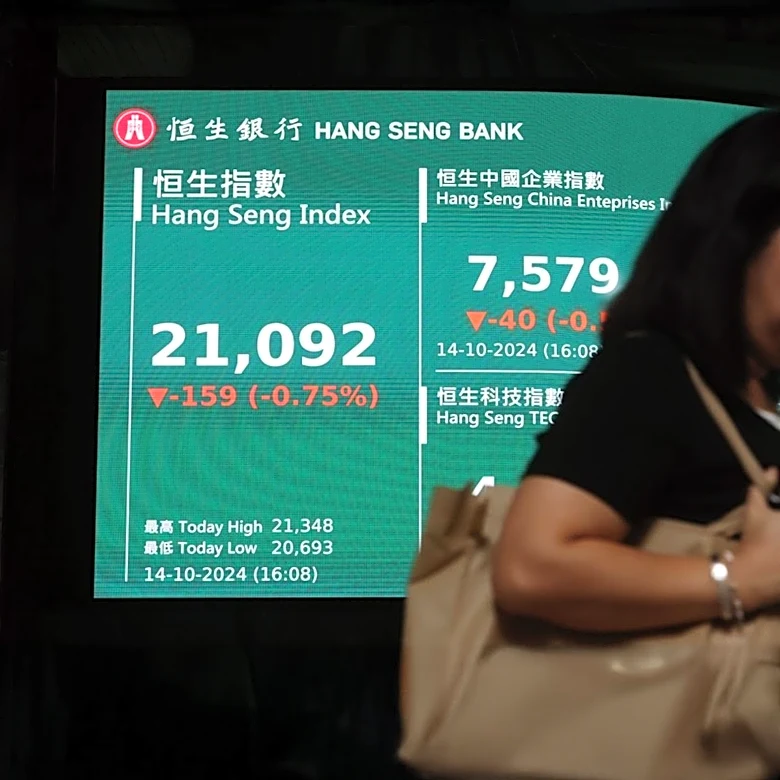
This report is crucial for understanding the current state and future outlook of the U.S. economy and financial markets. The rise in interest rates directly impacts borrowing costs for the U.S. government, businesses, and consumers, potentially influencing investment decisions, housing markets, and overall economic growth. The TBAC's observations on resilient economic activity despite higher rates suggest a robust underlying economy, but also highlight the challenges posed by persistent inflation and energy shocks. The Federal Reserve's actions to combat inflation, as noted in the report, are central to managing economic stability. The report's insights into the interplay between U.S. and international economic factors, such as European Central Bank and Bank of Japan rate hikes, underscore the interconnectedness of global financial markets and their influence on U.S. Treasury yields.
What's Next?
The TBAC recommended keeping nominal coupon, FRN, and TIPS auction sizes unchanged for the current quarter, but anticipates that increases in coupon auction sizes will be warranted later in FY27 due to projected funding gaps in FY28 and FY29. The Committee also emphasized the importance of clear communication from the Treasury regarding its forward-guidance language and maintaining a regular and predictable operating framework to help market participants adjust to future changes. Furthermore, the Committee encouraged Congress to act to raise or suspend the debt limit to avoid disrupting Treasury market functioning, increasing costs to taxpayers, and constraining economic growth. These recommendations aim to ensure stable financing for the government and maintain market confidence amidst evolving economic conditions.
Beyond the Headlines
The TBAC's report delves into several deeper implications beyond immediate market movements. It highlights the growing role of technology-related financing in capital markets, noting substantial private-sector financing needs and the increasing use of GPU-backed loans and data center project financing. While technology investment is seen as driving growth rather than crowding out Treasury demand, the Committee recommends continued monitoring of its effects. The report also discusses the increasing use of Treasury derivatives by asset managers and liability-driven investors, suggesting that derivatives enhance demand for Treasuries by broadening market access. Policy options to improve demand for cash Treasuries, such as easing regulatory constraints on balance sheet capacity and expanding access to repo financing, are also explored, indicating a focus on structural improvements to market functioning and liquidity.