




What's Happening?
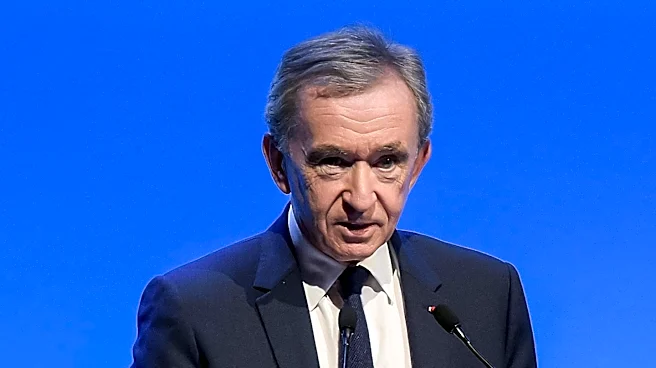
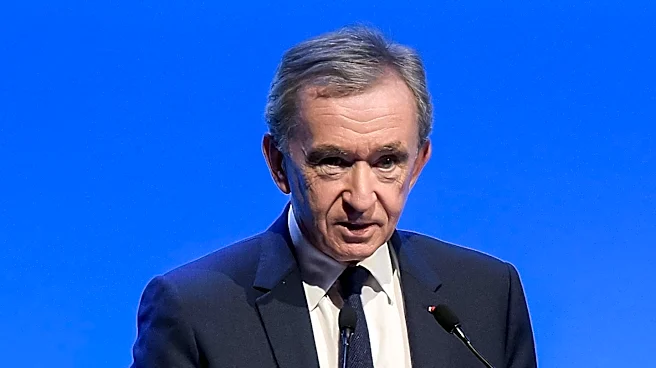
Bernard Arnault, Chairman and CEO of LVMH, has secured an extension allowing him to remain the managing general partner of Agache SCA until the age of 95. This move effectively grants him control of the luxury conglomerate until 2044. The restructuring
involves the merger of Agache with Christian Dior SE, which will consolidate nearly all of the Arnault family’s interests in LVMH into a single listed entity. Following this consolidation, Agache is projected to control 49.76% of LVMH’s share capital and 65.55% of its voting rights. Currently, the Arnault family collectively holds 50.33% of LVMH, with 66.27% of the voting rights. This strategic maneuver ensures the long-term stability of leadership within the luxury group.
Why It's Important?
This extension of Bernard Arnault's leadership has significant implications for the global luxury market and the future of LVMH. By securing his position until age 95, Arnault ensures continuity and stability in the strategic direction of one of the world's largest luxury goods companies. This move could reassure investors and stakeholders about the long-term vision and management of LVMH, which encompasses iconic brands across fashion, jewelry, and spirits. The consolidation of family interests through the Agache-Christian Dior SE merger also strengthens the family's control, potentially streamlining decision-making and protecting against external pressures. This could influence competitive dynamics within the luxury sector, as LVMH's sustained leadership under Arnault may allow for more aggressive expansion or strategic acquisitions, impacting rivals and market trends globally.
What's Next?
The restructuring and extension of Bernard Arnault's term are set to solidify the leadership structure of LVMH for decades. This move is likely to be followed by continued strategic investments and brand development within the LVMH portfolio, as the company maintains a clear, long-term vision under consistent leadership. The consolidation of family holdings could also pave the way for smoother succession planning in the distant future, as the family's control is now more formally structured. Competitors in the luxury market will be closely observing LVMH's moves, as Arnault's extended tenure suggests a period of sustained aggressive growth and market dominance. This could lead to increased competition for market share and talent within the luxury goods industry.
Beyond the Headlines
The decision to extend Bernard Arnault's control until age 95 highlights a broader trend in family-controlled conglomerates, where founders or their direct descendants maintain significant influence over corporate strategy for extended periods. This approach often prioritizes long-term vision and brand heritage over short-term financial pressures, which can be both a strength and a potential challenge. While it ensures stability and a consistent brand identity, it also raises questions about corporate governance and the eventual transition of leadership. The consolidation of family interests through the merger of Agache and Christian Dior SE underscores the importance of dynastic control in the luxury sector, where personal vision and legacy are often intertwined with business success. This model contrasts with more widely dispersed ownership structures, offering a unique perspective on corporate longevity and strategic planning.