




What's Happening?
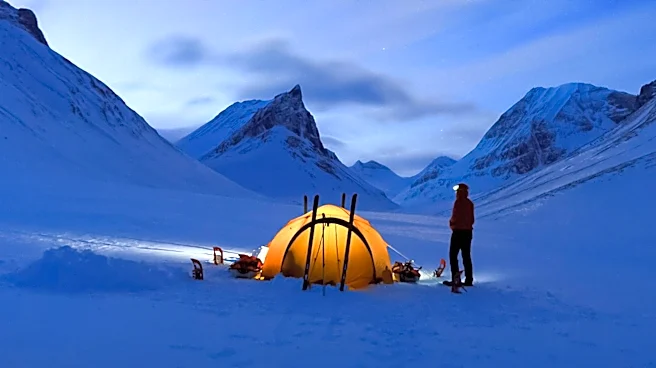
Eric Weld, known as 'Laptop' among thru-hikers, has successfully combined a semi-retired life of extensive outdoor adventures with part-time remote work. Weld, who previously had a 25-year career, now carries a 3.5-pound laptop on his journeys, which
have included thru-hiking the Appalachian Trail and Colorado Trail, cycling across the United States, and a 5,000-mile cycling trip from Vietnam to Indonesia. He dedicates 15-20 hours per week to his journalism job, often working from trail towns, libraries, or even his tent. This lifestyle requires meticulous planning to ensure access to Wi-Fi and power, often dictating his rest days and routes. Despite the added weight and logistical challenges, Weld has maintained his professional responsibilities, missing only one deadline in his years of remote adventuring.
Why It's Important?
This unique approach to semi-retirement and remote work highlights a growing trend of individuals seeking to integrate professional life with extensive personal pursuits. Weld's story demonstrates the feasibility of maintaining a career while pursuing a nomadic, adventure-filled lifestyle, challenging traditional notions of work-life balance. It underscores the increasing flexibility offered by remote work, enabling individuals to design lives that prioritize personal passions without fully disengaging from professional commitments. This model could inspire others to explore similar hybrid lifestyles, potentially influencing how companies view remote work policies and how individuals plan their post-career phases. The ability to fund adventures in real-time through remote work also offers a sustainable model for long-term travel and exploration.
What's Next?
Eric Weld plans to continue his adventurous lifestyle, with future endeavors including high-pointing the remaining U.S. states, cycling from Buenos Aires to Tierra del Fuego, thru-biking the length of Japan, and eventually thru-hiking the Pacific Crest Trail (PCT) and Continental Divide Trail (CDT) to complete his Triple Crown of hiking. His ongoing journey will likely continue to refine the strategies for combining remote work with extreme outdoor activities. As technology advances and remote work becomes more prevalent, more individuals may attempt similar feats, leading to further innovations in portable tech, connectivity solutions for remote areas, and evolving employer attitudes towards highly flexible work arrangements. Weld's experiences may also contribute to a broader discussion on the psychological and physical demands of such a lifestyle.
Beyond the Headlines
Weld's lifestyle touches upon deeper themes of personal fulfillment, the evolving nature of retirement, and the human desire for both intellectual engagement and physical challenge. By not fully retiring, he maintains a sense of purpose and mental activity through his journalism, while his adventures satisfy a profound need for physical movement and exploration. This balance suggests a redefinition of 'retirement' from a complete cessation of work to a more integrated model where work supports a desired lifestyle. It also highlights the psychological benefits of continuous learning and engagement, contrasting with the potential for stagnation in traditional retirement. The ethical implications for employers include fostering environments that support such unconventional work arrangements, potentially leading to a more diverse and satisfied workforce.