




What's Happening?
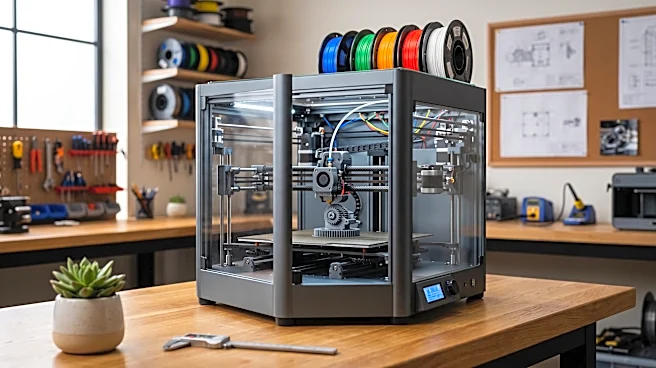
Creality, a Shenzhen-based manufacturer of consumer and prosumer 3D printers, showcased a full 3D printing workflow at Formnext 2026 in Frankfurt, Germany. The company introduced new products including the Raptor Pro Max 3D scanner and the mBox, a 3D printer designed
for children and students. These additions complement their existing offerings, such as the SPARKX i8 multi-color 3D printer, print farm setups, and M1/R1 material recycling systems. Creality's strategy is to provide an end-to-end solution, enabling users to move from an idea or physical object to a finished, sellable product. The SPARKX i8, which has completed a successful crowdfunding campaign, aims to make color printing more accessible by simplifying the process and reducing common issues like slow jobs and excessive waste. The company emphasizes that color printing should become a routine part of making things, targeting hobbyists, beginners, and those interested in custom home décor and figurines.
Why It's Important?
Creality's move to offer a complete 3D printing ecosystem signifies a shift in the entry-level 3D printer market, where competition is intense, with companies like Bambu Lab, Elegoo, and Anycubic dominating shipments. By integrating scanning, printing, and recycling solutions, Creality is positioning 3D printing as a practical production method for small businesses, independent creators, and entrepreneurs. This approach allows individuals to transform digital designs into customized products without the need for traditional manufacturing infrastructure, potentially lowering barriers to entry for new ventures. The emphasis on material reuse through the M1/R1 recycling solutions also promotes more flexible and resource-efficient production. This development could foster innovation and entrepreneurship in the U.S. by providing accessible tools for personalized merchandise, small-batch production, and creative endeavors, impacting local economies and small business growth.
What's Next?
Creality's focus on a full workflow suggests a future where 3D printing becomes more integrated and user-friendly for a broader audience. The company's strategy of combining scanning hardware with multi-color printers aims to simplify the creation process, particularly for beginners who may lack CAD skills. This could lead to increased adoption of 3D printing for everyday uses and small-scale commercial applications. The competitive landscape, with rivals like ELEGOO and Snapmaker also developing comprehensive solutions, indicates a trend towards ecosystem-based offerings rather than standalone machines. The success of Creality's integrated approach will depend on how smoothly these various components work together, and if they can truly deliver on the promise of making 3D printing a routine and accessible tool for both personal and business use. Continued innovation in ease of use and material efficiency will likely drive further market expansion.
Beyond the Headlines
The shift towards comprehensive 3D printing ecosystems, as exemplified by Creality, has deeper implications for manufacturing and creative industries. By democratizing access to advanced production tools, it challenges traditional manufacturing models that often require significant capital investment. This could lead to a resurgence of localized production and bespoke manufacturing, empowering individual creators and small businesses to compete with larger entities. The emphasis on material recycling also highlights a growing awareness of sustainability within the 3D printing sector, potentially driving more eco-conscious practices. Furthermore, the introduction of educational tools like the mBox suggests a long-term vision to integrate 3D printing into early education, fostering a new generation of designers and innovators. This technological evolution could reshape supply chains, encourage creative entrepreneurship, and promote more sustainable production methods across various sectors.