
What's Happening?
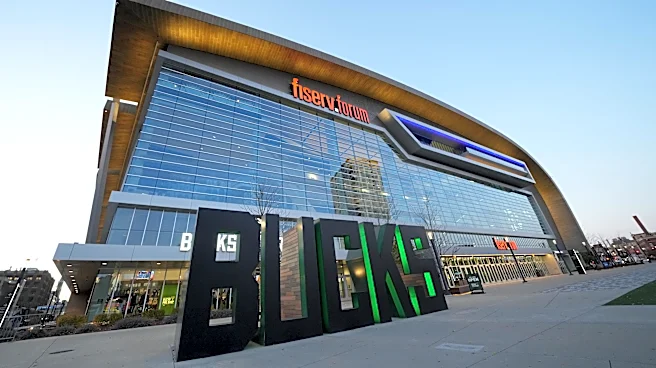
Fiserv, a provider of technology to merchants and financial institutions, announced flat organic revenue at the group level for its latest quarter. Despite this, the company maintained its annual outlook
and increased the savings target under its operating improvement program, Project Elevate. This program aims to address cost structure and operational organization by identifying additional operational efficiencies and reviewing its portfolio. A notable divergence was observed within the company's operations: its merchant business experienced a decline in organic revenue, while its financial operations returned to growth. This indicates differing developments within the various segments contributing to the overall group performance. Fiserv's merchant services include payment acceptance and commerce support software, while its financial technology activities encompass systems used by financial institutions.
Why It's Important?
The operational divergence within Fiserv highlights the varied impacts of customer demand and operating costs on different segments of a large technology provider. For the U.S. financial and commerce sectors, Fiserv's performance is a key indicator of underlying trends. A decline in merchant organic revenue could signal shifts in consumer spending patterns or increased competition in payment processing, affecting numerous small and large businesses that rely on such services. Conversely, growth in financial operations suggests resilience or increased demand for banking technology solutions. The increased savings target under Project Elevate indicates a strategic focus on efficiency and cost management, which could lead to a more streamlined and potentially more profitable operation, benefiting shareholders and potentially influencing pricing for its clients in the long run. The success of this program will be crucial for Fiserv's competitive standing in the evolving fintech landscape.
What's Next?
Fiserv's immediate focus will be on the implementation of Project Elevate to realize the increased savings target. The company will need to demonstrate progress in operational improvement, continued utilization of its merchant platforms, and the actual integration benefits from its strategic initiatives. Key indicators to watch include cash generation and statutory profitability, which will provide complementary evidence of the financial consequences of these efforts. The market will be observing how Fiserv manages the differing performance of its merchant and financial segments, and whether the operational efficiencies can offset any continued softness in the merchant business. Future disclosures will offer insights into the effectiveness of its cost-cutting measures and its ability to adapt to changing customer demands and operating environments within the payment technology sector.
Beyond the Headlines
The contrasting performance between Fiserv's merchant and financial operations underscores a broader trend in the payment technology sector: the increasing specialization and varied economic drivers within different segments. While merchant services are often directly tied to transaction volumes and consumer spending, financial institution technology can be driven by regulatory changes, digital transformation initiatives, and the need for robust back-end systems. This divergence suggests that a 'one-size-fits-all' approach to growth and operational strategy may no longer be sufficient for large fintech companies. It also highlights the importance of portfolio diversification and the ability to adapt to distinct market dynamics within different business units. The emphasis on operational efficiency through programs like Project Elevate reflects a mature industry's response to competitive pressures and the need to optimize resources in a complex technological environment.