


What's Happening?
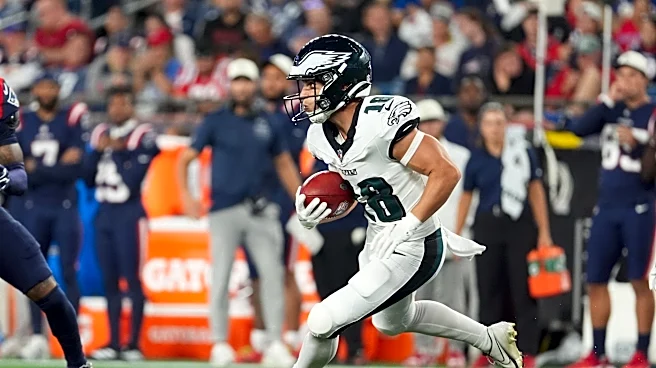
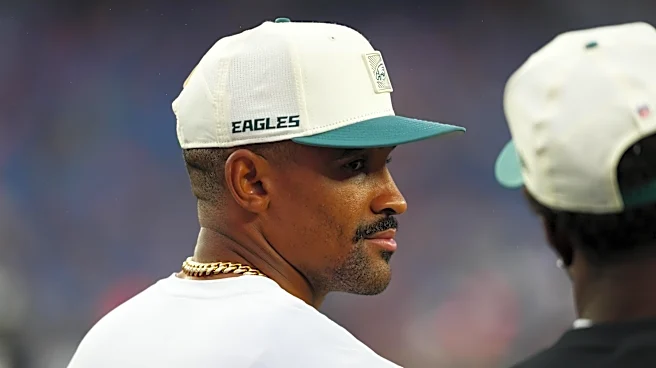
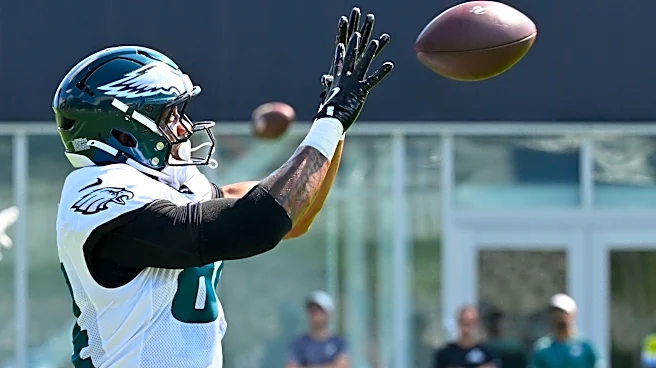
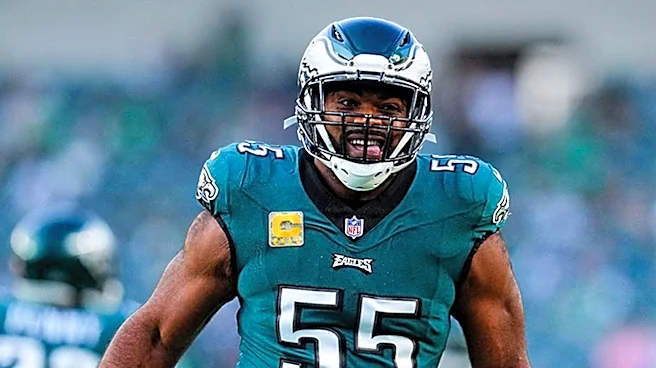
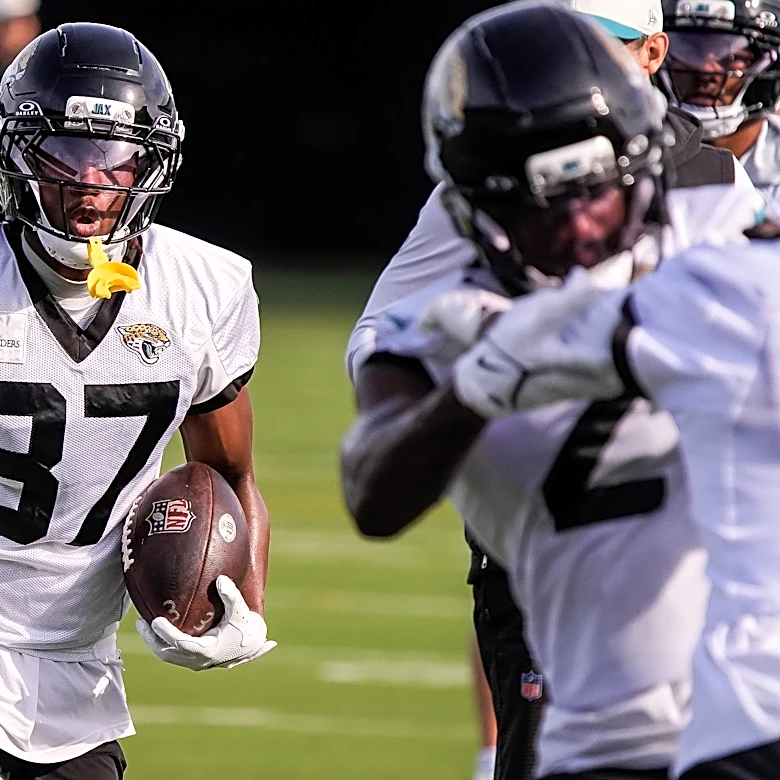
The Philadelphia Eagles have updated jersey numbers for several players following recent NFL roster cuts. Quarterback Cole Payton, previously sharing No. 10 with punter Braden Mann, will now wear No. 18. This change was necessitated as NFL rules do not
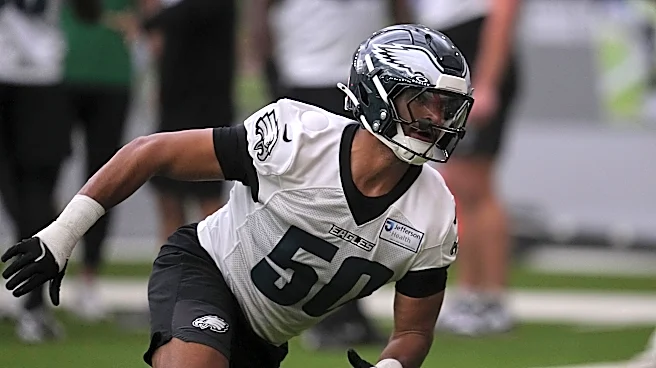
permit two players to have the same jersey number during the regular season. Other notable changes include cornerback Jonathan Jones moving from No. 32 to No. 31, and long snapper Rocco Underwood switching from No. 37 to No. 41. Additionally, players on the practice squad and injured reserve, such as running back Jaydon Blue (now No. 30) and safety Andre’ Sam (now No. 32), have also received new numbers. Wide receiver Britain Covey was impacted by Payton's change, moving from No. 18 to No. 85. These adjustments are common during the transition from the offseason, where larger rosters allow for number duplication, to the regular season.
Why It's Important?
Jersey number changes, while seemingly minor, can hold significance for players and fans, often reflecting a player's status or personal preference. For rookie quarterback Cole Payton, adopting No. 18, famously worn by Peyton Manning, could symbolically elevate his profile and fan perception, even if it's a fourth-string position. For veterans like Jonathan Jones, returning to a number worn earlier in their career can signify comfort or a return to form. These changes also impact merchandise sales and fan identification with players. From a team management perspective, assigning numbers involves balancing player preferences with roster availability and team tradition. The necessity for these changes highlights the logistical aspects of managing an NFL roster, particularly as teams finalize their active rosters and practice squads, ensuring compliance with league regulations regarding uniform numbers.
What's Next?
With the regular season approaching, these jersey number assignments are likely finalized for the immediate future. Players will now wear these numbers throughout the upcoming season, impacting how fans identify them on the field and in merchandise. Future changes could occur in subsequent seasons, particularly if players move between teams, new numbers become available, or if a player's role within the team changes significantly. For players like Britain Covey, who received a less desirable number due to another player's change, there might be an opportunity in future seasons to request a different number if it becomes available, potentially influencing fan engagement and personal branding. The team will continue to monitor roster dynamics, which could indirectly lead to further number adjustments down the line.
Beyond the Headlines
Beyond the immediate practicalities, jersey numbers in sports often carry a cultural weight, becoming synonymous with legendary players or specific positions. For Cole Payton, wearing No. 18 could inadvertently create a narrative or expectation, drawing comparisons to its famous predecessors, which could be a source of motivation or pressure. The process of assigning and changing numbers also reflects the hierarchical structure within a team, where established players often have more say in their number choice than rookies or practice squad members. This seemingly small detail contributes to the broader identity and narrative of a sports franchise, influencing fan loyalty and the historical legacy of players within the team's lore. The emotional attachment fans develop to specific numbers worn by their favorite players underscores the deeper cultural significance of these numerical designations.