
What's Happening?
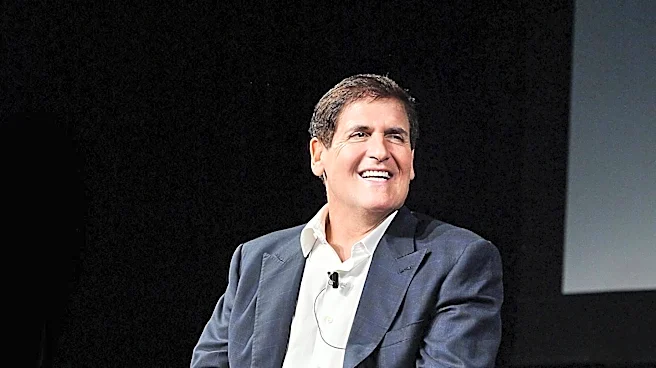
Billionaire entrepreneur Mark Cuban asserts that the fundamental issue in the U.S. healthcare system is not whether the government or private sector dominates, but rather the lack of transparency regarding
costs. In an interview with KFF Health News on August 18, Cuban stated that without knowing all the costs, it is impossible to determine effective solutions. He emphasized that rebuilding trust in the healthcare system is crucial, defining trust as 'transparency divided by self-interest.' Cuban, co-founder of Mark Cuban Cost Plus Drugs, which offers generic prescription drugs with transparent pricing and a 15% markup, believes that every medical purchase should count towards health insurance deductibles and out-of-pocket maximums to incentivize consumers to seek the best prices for nonemergency services. He also advocates for breaking up large, vertically integrated health companies to reduce prices.
Why It's Important?
Mark Cuban's call for full price transparency in healthcare is significant because it addresses a core inefficiency and inequity in the U.S. system. The current opacity of healthcare costs often leaves consumers and even providers in the dark, leading to inflated prices and unexpected bills. By advocating for transparent pricing, Cuban aims to empower consumers, foster competition, and ultimately drive down costs. His model with Mark Cuban Cost Plus Drugs demonstrates a viable alternative to traditional pharmaceutical pricing, offering substantial discounts on thousands of medications. This approach challenges the established practices of an industry often criticized for its lack of accountability and high profit margins. If widely adopted, price transparency could fundamentally alter how healthcare services and medications are bought and sold, shifting power dynamics towards consumers and potentially leading to more equitable access to care.
What's Next?
Cuban's advocacy for healthcare price transparency is likely to fuel ongoing debates and legislative efforts aimed at reforming the U.S. healthcare system. His remarks come amidst growing support for initiatives like 'Medicare for All' and bipartisan efforts to address healthcare costs, such as the 'Break Up Big Medicine Act.' While full transparency faces significant resistance from entrenched interests within the healthcare industry, the success of ventures like Mark Cuban Cost Plus Drugs provides a tangible model for change. Future developments may include increased pressure on lawmakers to mandate price transparency, greater consumer demand for clear pricing, and potentially more companies adopting similar transparent business models. The conversation will continue to revolve around how to implement these changes effectively and overcome the powerful lobbying efforts of those who benefit from the current opaque system.
Beyond the Headlines
The push for healthcare price transparency, championed by figures like Mark Cuban, extends beyond mere economic efficiency; it touches upon fundamental issues of consumer rights, market fairness, and public trust. The current system's lack of transparency creates an information asymmetry that disadvantages patients, making it nearly impossible for them to make informed decisions about their care or challenge exorbitant costs. This opacity also contributes to a sense of distrust in the healthcare industry, eroding the patient-provider relationship. By advocating for transparency, Cuban is not just proposing a business model but a philosophical shift towards a more ethical and accountable healthcare ecosystem. This movement could inspire broader discussions about corporate responsibility, the role of government in regulating essential services, and the potential for technology to democratize access to information and empower individuals in complex markets.