






What's Happening?
A team of ecologists and agricultural engineers has discovered the genetic basis behind the unique flowering patterns of avocado trees, which switch sexes daily to avoid self-pollination. This phenomenon, known as temporal dichogamy, has puzzled botanists
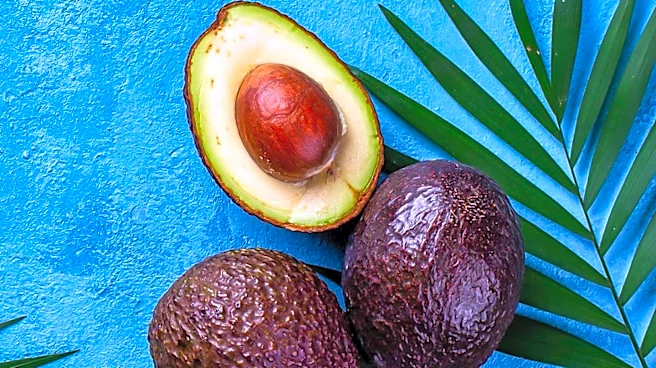
for over a century. The study, conducted by researchers from the University of California, revealed that the SDMYB gene, which comes in two variants, controls whether an avocado tree is an A-type or B-type. A-type trees open their female flowers in the morning and male flowers in the afternoon, while B-type trees do the opposite. This discovery allows for more efficient avocado breeding, as growers can now determine the flower type of a tree without waiting for it to mature and flower, which can take up to 15 years.
Why It's Important?
The identification of the genetic markers responsible for avocado flowering patterns is a significant breakthrough for the agricultural industry, particularly for avocado growers. By understanding the genetic basis of these patterns, breeders can make informed decisions early in the cultivation process, saving time and resources. This advancement is particularly beneficial for California avocado growers, who can optimize their orchards by strategically planting B-type pollinizer trees to enhance the fruit production of A-type trees. The ability to select plants based on their genetic markers rather than waiting for them to flower could lead to increased efficiency and productivity in avocado farming, potentially reducing costs and increasing supply in the market.
What's Next?
With the genetic markers now identified, avocado breeders can begin implementing this knowledge to improve breeding programs. This could lead to the development of new avocado varieties with desirable traits, such as increased yield or disease resistance. While gene editing applications may still be years away, the immediate application of these findings will streamline the selection process for breeders. As the industry adapts to this new information, it is likely that we will see advancements in avocado cultivation techniques and possibly the introduction of new avocado products in the market.