






What's Happening?
Hyundai Motor Group recently hosted the 'HMG Tech Talent Forum' in Silicon Valley, U.S., to engage with top global talent in cutting-edge technologies. During the forum, President and CEO José Muñoz of Hyundai Motor articulated the company's evolution
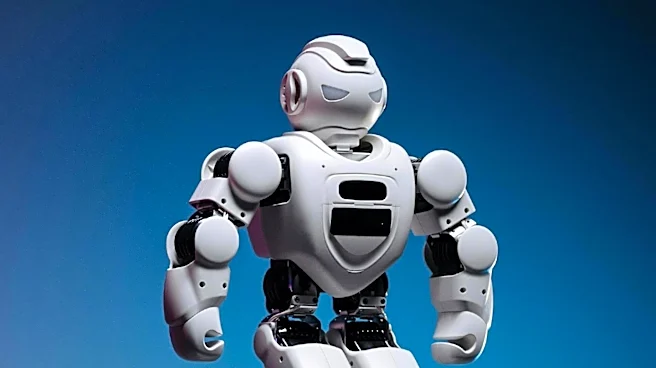
into a 'Physical AI' corporation, focusing on the development of robotics, autonomous driving vehicles, and the software that integrates them. Physical AI, as defined by Hyundai, involves machines and devices understanding real-world environments through cameras and sensors to act proactively. The event, held since the 17th local time at the San Jose McEnery Convention Center, served as a platform for Hyundai Motor Group to showcase its future technology vision and innovation cases. Key affiliates, including Hyundai Motor, Kia, Hyundai America Technical Center (HATCI), Hyundai Motor Group Metaplant America (HMGMA), Boston Dynamics, Motional, and 42dot, participated. The forum also included integrated hiring efforts to recruit tech talent, with programs like 'HR coffee chat' for career counseling and on-site interviews for candidates from the HMG Global Tech Talent recruitment drive.
Why It's Important?
Hyundai Motor Group's strategic focus on Physical AI and its active recruitment of U.S. tech talent underscore a significant shift in the automotive industry towards advanced technological integration. This initiative is crucial for the U.S. as it positions the country at the forefront of innovation in robotics, autonomous driving, and artificial intelligence, potentially fostering job creation and economic growth in the tech sector. By investing in U.S.-based R&D and talent, Hyundai is contributing to the development of a highly skilled workforce and strengthening the U.S.'s competitive edge in these emerging fields. The emphasis on Physical AI could lead to breakthroughs in various applications beyond vehicles, impacting logistics, manufacturing, and smart infrastructure. This move also signifies a broader trend of global automotive manufacturers establishing strong technological footprints in the U.S., leveraging its innovation ecosystem and talent pool to drive future mobility solutions. U.S. tech professionals stand to gain from increased opportunities in these high-demand areas.
What's Next?
Following the HMG Tech Talent Forum, Hyundai Motor Group is expected to continue its efforts to expand exchanges with global tech talent and solidify its technological competitiveness. The integrated hiring initiatives launched during the forum suggest a sustained recruitment drive for specialists in AI, robotics, autonomous driving, smart manufacturing, software, IT, hydrogen, energy, and batteries. The company's commitment to building a Physical AI organization, based on accumulated data and real-world experience, indicates ongoing research and development in these areas. Future developments will likely include further integration of AI and virtual development technologies into their engineering processes, aiming to enhance system speed and efficiency. Stakeholders, including U.S. tech universities and research institutions, may see increased collaboration opportunities with Hyundai Motor Group as it seeks to lead the next-generation mobility era. The company's continued investment in U.S. operations, including its North American headquarters and manufacturing plants, will likely support these technological advancements.
Beyond the Headlines
Hyundai Motor Group's pursuit of Physical AI extends beyond mere technological advancement; it represents a fundamental redefinition of mobility and human-machine interaction. The concept of machines understanding and proactively acting in the real world through AI has profound ethical and societal implications. As autonomous systems become more prevalent, questions of accountability, decision-making in complex scenarios, and the impact on human employment will become increasingly critical. Furthermore, the push for Physical AI could accelerate the convergence of various industries, blurring the lines between automotive, robotics, and software development. This interdisciplinary approach could lead to unforeseen innovations and challenges, requiring new regulatory frameworks and public discourse. The long-term shift towards intelligent mobility, driven by companies like Hyundai, will necessitate a societal adaptation to a world where physical and artificial intelligence are seamlessly integrated, potentially transforming urban planning, transportation, and daily life.