
What's Happening?
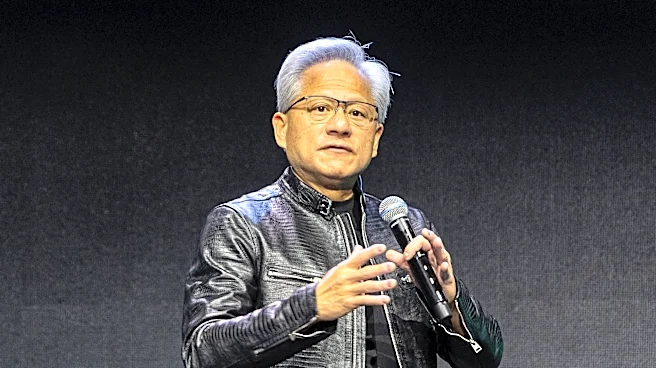
Jensen Huang, the founder and CEO of Nvidia, resigned from his positions as president, CEO, and board member on November 12, 2026. According to Brian Chau, founder of Effort News, the national security
justifications for Huang's ouster were fabricated and subsequently disproven. The initial allegation involved a businesswoman, Alice Huang, being a Chinese spy, a claim that the Singapore government disavowed and the Justice Department had not concluded. Further claims of misrepresented intelligence findings and Nvidia smuggling chips were also contradicted by the Commerce Department, which confirmed Nvidia's compliance. Chau asserts that the media effectively redefined 'smuggling' to mean legal compliance that was legislatively undesirable. The board's official statement on November 17, through chairman Harvey C. Jones, cited 'personal behavior inconsistent with the company's code of conduct, standards and cultural norms' as the reason for accepting Huang's resignation, rather than the national security claims.
Why It's Important?
This event highlights significant concerns regarding corporate governance, the influence of national security narratives on business decisions, and the potential for fabricated information to impact high-profile executives and companies. The alleged use of unverified national security claims to remove a CEO of a leading technology company could set a dangerous precedent, potentially making other founders vulnerable. It also raises questions about the transparency and accountability of corporate boards, particularly when faced with external pressures or media campaigns. The situation could deter innovation and investment if founders perceive a heightened risk of being ousted based on unsubstantiated allegations, impacting the U.S. technology sector's competitiveness and stability. The lack of clear, consistent reasoning from the board further complicates the situation for shareholders and the broader market.
What's Next?
The ongoing criminal investigation by the Justice and Commerce departments, opened in 2024, regarding Megaspeed, a Singapore-based cloud provider, continues, though no public findings against Nvidia have been made. The board's public stance is that they unanimously accepted Huang's resignation and do not intend to reinstate him. However, Brian Chau suggests that Huang's return is underrated on prediction markets, and President Trump has publicly expressed a desire for Huang's return. The incident may prompt increased scrutiny of corporate board compositions and their decision-making processes, especially concerning founder-led companies. It could also lead to a re-evaluation of how national security concerns are vetted and communicated, particularly when they intersect with corporate leadership and market stability.
Beyond the Headlines
The incident delves into the deeper implications of ideological conflicts, particularly the 'China Hawk' worldview, on American business and policy. Chau argues that this faction's policies, which include export controls and centralized regulation, mirror Chinese methods and could ultimately make America less free and prosperous. He suggests that the 'China Hawks' are 'unconditional authoritarians' whose goals are not specific to China but rather a broader agenda of control, citing their past advocacy for similar policies under different pretexts. This perspective suggests a potential long-term shift in the U.S. policy establishment, where economic and technological competition with China could be used to justify policies that fundamentally alter American values and economic freedom. The 'Nvidia coup,' as Chau describes it, could serve as a wake-up call for Silicon Valley regarding the extent to which policy establishments might go, irrespective of factual accuracy.