





What's Happening?
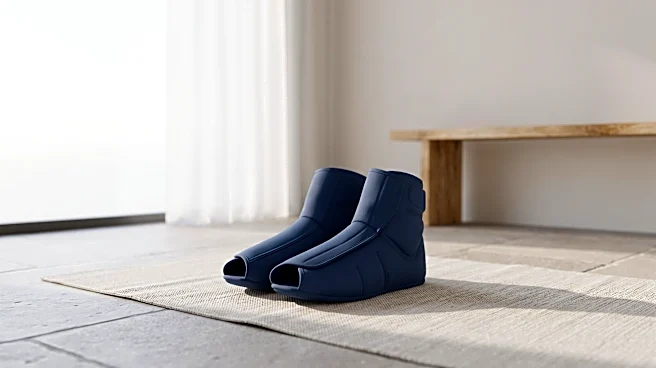
Recovery boots, including models like Therabody RecoveryAir JetBoots and Normatec compression boots, are gaining traction for their ability to aid muscle recovery. These devices employ dynamic air compression, which involves sequential inflation and deflation
of air chambers to stimulate circulation and provide a deep-pressure massage. Facilities such as the Jewish Community Center of San Francisco offer access to these technologies. Key features often include FastFlush Technology, designed to rapidly cycle air through the chambers, and customizable pressure settings to suit individual comfort levels. Users typically wear these boots over comfortable clothing, and sessions can range from 15 to 30 minutes. The primary goal of these boots is to reduce muscle soreness and enhance comfort after physical exertion, making them a popular choice for passive recovery.
Why It's Important?
The increasing popularity of recovery boots highlights a growing trend in athletic and general wellness toward advanced recovery methods. For athletes and individuals engaged in regular physical activity, these devices offer a convenient and passive way to manage post-workout muscle fatigue and soreness. By improving circulation, they can potentially aid in the removal of metabolic waste products and delivery of oxygen and nutrients to tired muscles. This can lead to a quicker return to baseline comfort, although research consistently indicates that these tools reliably reduce perceived soreness rather than guaranteeing measurable improvements in next-day performance or strength. The accessibility of these devices in various wellness centers and their availability for home use signifies a broader acceptance of technology-assisted recovery in daily routines.
What's Next?
As the market for recovery technology expands, further innovations in compression boot design and functionality are anticipated. This could include more personalized compression patterns, integration with biometric data for optimized recovery protocols, and increased portability. The ongoing research into the physiological benefits of dynamic air compression will likely refine recommendations for usage and target specific recovery needs. Additionally, as these technologies become more mainstream, there may be a greater emphasis on affordability and accessibility, potentially leading to a wider range of products at different price points. The integration of recovery boots into broader wellness programs, beyond just athletic training, is also a likely next step, catering to individuals seeking general circulatory benefits or relief from everyday muscle stiffness.
Beyond the Headlines
Beyond their immediate benefits for muscle recovery, the widespread adoption of devices like recovery boots reflects a cultural shift towards proactive self-care and performance optimization. This trend is fueled by both professional athletes seeking marginal gains and the general public looking to maintain an active lifestyle with less discomfort. The ethical implications revolve around managing consumer expectations, as marketing often emphasizes performance enhancement, while scientific evidence more strongly supports subjective comfort improvements. Legally, as these devices become more sophisticated and integrated with health data, regulations around medical claims and data privacy may become more pertinent. Culturally, the normalization of using advanced technological aids for physical well-being could reshape how individuals approach fitness, recovery, and overall health management, potentially fostering a greater reliance on tools rather than traditional methods like rest and nutrition alone.