






What's Happening?
Tiny house residents are receiving guidance on optimizing their limited bathroom spaces through innovative storage solutions. The advice emphasizes avoiding common pitfalls such as overcrowding, poor lighting, and inadequate ventilation. Key strategies
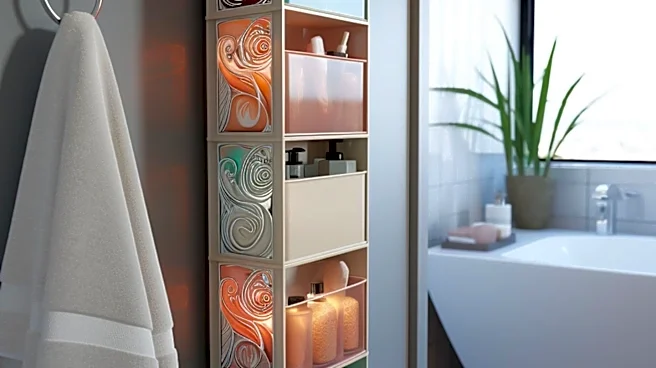
include maximizing vertical space with wall-mounted shelving and over-the-door organizers, and utilizing multi-functional furniture like vanities with integrated storage. Creative solutions such as magnetic strips for small metal items, decorative baskets and bins for organization, and pegboards for hanging toiletries are also recommended. The goal is to ensure functionality and accessibility while maintaining a visually appealing environment in compact bathrooms. Planning is highlighted as crucial, involving inventorying items, measuring space accurately, and prioritizing functionality for easy access to frequently used items.
Why It's Important?
For the growing number of Americans embracing tiny home living, efficient space utilization is paramount, particularly in bathrooms where square footage is severely limited. This guidance directly impacts the quality of life and practicality for tiny house owners by transforming potentially cramped and cluttered spaces into organized and functional areas. By adopting these strategies, residents can prevent issues like mold and mildew through proper ventilation, enhance comfort, and maintain a sense of order in their compact dwellings. The emphasis on multi-functional furniture and vertical storage also offers economic benefits by reducing the need for additional, space-consuming items, thereby making tiny living more sustainable and enjoyable. This trend reflects a broader shift towards minimalist living and efficient design in U.S. housing.
What's Next?
As the tiny house movement continues to gain traction across the U.S., further innovations in compact living solutions are anticipated. Manufacturers and designers are likely to integrate more of these space-saving features directly into tiny home designs, offering built-in solutions that cater to the specific needs of small-space dwellers. Educational resources and workshops focusing on tiny house design and organization may also become more prevalent, empowering owners with practical skills. Additionally, the market for specialized tiny house furniture and accessories, including modular and collapsible items, is expected to expand, providing more options for customization and efficiency. The ongoing development of smart home technologies could also introduce automated or integrated storage systems for even greater space optimization.
Beyond the Headlines
The focus on maximizing space in tiny house bathrooms extends beyond mere practicality; it reflects a deeper cultural shift towards conscious consumption and sustainable living in the U.S. This movement challenges traditional notions of home size and resource use, promoting a lifestyle that values efficiency and minimalism over excess. The design principles applied in tiny homes, such as multi-functional elements and vertical storage, could influence broader architectural trends, inspiring more efficient use of space in conventional housing and urban planning. Furthermore, the emphasis on proper ventilation and organization in small spaces underscores a growing awareness of health and well-being within compact environments, highlighting the psychological benefits of an uncluttered and well-maintained living area, regardless of its size.