








What's Happening?
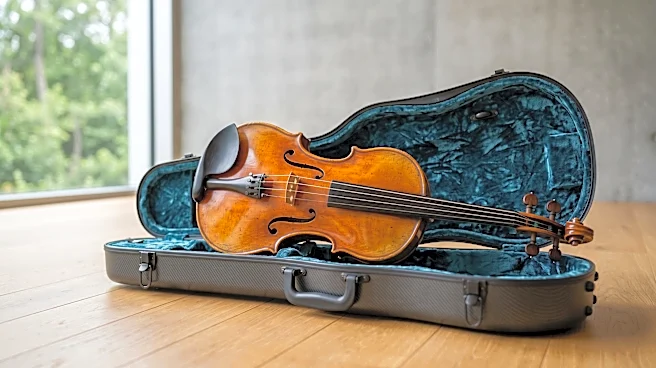
The Stradivari Society has welcomed violinist Clark Snavely, an alumnus of the Music Institute of Chicago (MIC) Academy, by providing him with a rare Francesco Gobetti violin from Venice, 1714, known as 'Van Dyl.' This loan is facilitated through the Society's
generous patrons. Founded in 1985 by Geoffrey Fushi and Mary Galvin, the Stradivari Society aims to preserve and promote excellence in classical music by connecting promising young artists with high-quality antique Italian instruments. Snavely, who currently studies at the New England Conservatory of Music, has a distinguished performance history, including solo appearances with orchestras like the Milwaukee Symphony Orchestra and the Wisconsin Chamber Orchestra. He has also won numerous awards, such as the New England Conservatory Concerto Competition and a silver medal at the Fischoff National Chamber Music Competition as part of the Pelios String Quartet.
Why It's Important?
This initiative by the Stradivari Society is crucial for the development of classical music in the U.S. and globally. By providing exceptional instruments to talented young musicians like Clark Snavely, the Society directly addresses a significant financial barrier that often prevents artists from reaching their full potential. Access to instruments of this caliber allows musicians to refine their craft, perform at higher levels, and gain international recognition, thereby enriching the cultural landscape. This support not only benefits individual artists but also ensures the continued vibrancy and evolution of classical music, fostering new generations of performers and audiences. The recognition of American talent through such prestigious loans also elevates the U.S.'s standing in the international classical music community.
What's Next?
Clark Snavely will continue his studies at the New England Conservatory of Music, utilizing the Francesco Gobetti violin in his performances and practice. The loan of this instrument is expected to further enhance his career trajectory, potentially leading to more prominent solo and chamber music engagements. The Stradivari Society will likely continue its mission of identifying and supporting other emerging artists, ensuring that valuable antique instruments are placed in the hands of those who can best utilize them. This ongoing support will contribute to the development of future classical music stars and the preservation of musical heritage. Snavely's future performances with this instrument will be closely watched by the classical music community.
Beyond the Headlines
The practice of loaning rare and valuable instruments to emerging artists highlights a unique intersection of philanthropy, cultural preservation, and artistic development. These instruments, often centuries old, carry immense historical and artistic significance. Their continued use by contemporary musicians ensures that their unique tonal qualities and historical narratives are kept alive, rather than being confined to museums or private collections. This model also underscores the importance of private foundations and patrons in sustaining the arts, particularly in fields where the cost of essential tools can be prohibitive. It raises questions about the accessibility of high-level artistic training and resources, and how such initiatives can democratize opportunities for talented individuals regardless of their economic background.