







What's Happening?
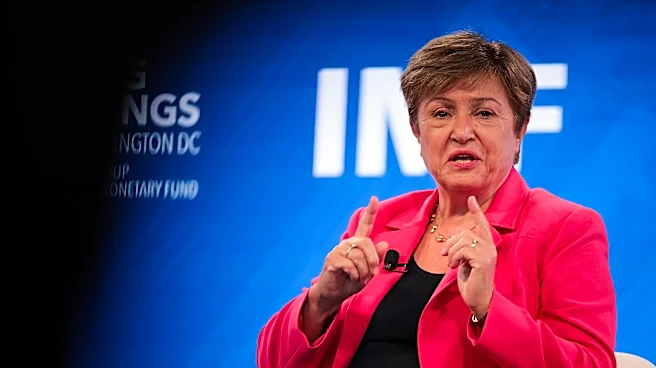
Kristalina Georgieva, Managing Director of the International Monetary Fund (IMF), has issued a warning regarding the global economy's increasing reliance on Artificial Intelligence (AI). Speaking on the sidelines of the ASEAN summit, Georgieva highlighted
that this heavy dependence could jeopardize financial stability if investor confidence were to falter. She specifically expressed concerns about "circular financing" within the AI industry, indicating that the IMF is actively monitoring concentration risks and the interdependence among various AI investments. This statement underscores a growing apprehension among international financial institutions about the potential systemic risks associated with the rapid expansion and financial structures of the AI sector.
Why It's Important?
The IMF's warning is significant because it signals a potential vulnerability in the global financial system, particularly for the U.S. economy, which is a major hub for AI development and investment. A loss of investor confidence in the AI sector, as cautioned by Georgieva, could trigger a broader economic downturn, impacting stock market valuations, employment, and overall economic growth. The concern over "circular financing" suggests that some AI investments might be based on inflated valuations or interconnected financial arrangements that lack genuine underlying value, creating a bubble-like scenario. If this bubble were to burst, it could lead to significant losses for investors, financial institutions, and potentially destabilize the U.S. and global markets. This highlights the need for careful monitoring and potentially new regulatory frameworks to ensure the sustainable growth of the AI industry without compromising financial stability.
What's Next?
The IMF's concerns suggest that international financial bodies will likely increase their scrutiny of the AI industry's financial practices, particularly regarding investment structures and concentration risks. This could lead to calls for greater transparency in AI financing and potentially new guidelines or regulations to mitigate systemic risks. For U.S. businesses and investors in the AI sector, this warning implies a need for caution and a thorough assessment of their financial strategies and interdependencies. Policymakers in the U.S. may also consider how to balance fostering innovation in AI with ensuring financial stability, possibly through regulatory adjustments or enhanced oversight. The ongoing monitoring by the IMF will provide crucial insights into the evolving risks and could inform future policy decisions aimed at safeguarding the global economy.
Beyond the Headlines
Beyond the immediate financial implications, Georgieva's warning touches upon the broader societal and economic transformation driven by AI. While AI promises significant productivity gains and economic growth, its rapid and sometimes unchecked expansion can introduce unforeseen risks. The concept of "circular financing" points to a potential disconnect between technological promise and sustainable economic models, where speculative investment might outpace real-world value creation. This situation could lead to a misallocation of capital, diverting resources from other critical sectors. Furthermore, the interconnectedness of AI investments means that a failure in one part of the ecosystem could have cascading effects, highlighting the need for a holistic approach to understanding and managing the economic impact of emerging technologies. The long-term challenge lies in harnessing AI's transformative power while building robust financial safeguards.