







What's Happening?
Sudanese visual artist Amani Azhari is utilizing her art to explore the profound impact of war and trauma on women, and to preserve Sudanese identity amidst the ongoing conflict. Through her series 'Healing Sessions,' Azhari creates a space for sharing,
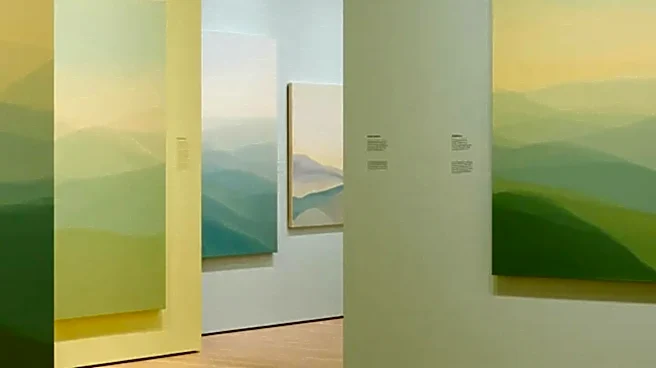
mutual support, and psychological healing, drawing inspiration from traditional women's gatherings in Sudanese homes. Her paintings depict women in various poses, conveying pain, loneliness, comfort, and contemplation, while also highlighting the burdens they carry. Azhari, who experienced shock and isolation after the war broke out, uses these sessions to allow Sudanese people living abroad to recount their experiences of fear, pain, and loss. She views traditional women's gatherings as a form of informal psychological support, offering safety, belonging, and solidarity. Additionally, Azhari's work, such as 'The Room Inside Me,' explores displacement and the idea that Sudan is an inner space carried by its people, filled with memories, customs, and values.
Why It's Important?
Azhari's artistic endeavors are crucial for addressing the psychological and social wounds inflicted by the prolonged conflict in Sudan. By providing a platform for expression and shared experience, her work contributes to collective healing and the preservation of cultural heritage, which is often threatened during times of war. The focus on women's experiences is particularly significant, as women often bear disproportionate burdens during conflict, including displacement, family responsibilities, and the struggle to rebuild lives. Her art challenges the notion of Sudan as merely a geographical location, emphasizing the enduring connection between people and their homeland through memory and identity. This approach offers a powerful counter-narrative to the violence, fostering hope and resilience within the Sudanese community, both at home and in the diaspora.
What's Next?
Azhari continues to participate in initiatives that use art to raise awareness about the war in Sudan and advocate for its end, such as the Barddoha campaign. Her artwork, including a piece featuring a clock with hands stopped at April 13 and an inverted rifle, aims to convey the feeling that time has halted in Sudan due to the conflict. She is also involved in workshops and discussion sessions with civil society representatives, exploring art's role in addressing war consequences. Azhari's exhibitions, including upcoming ones in October, aim to bring Sudanese experiences to a wider audience and draw attention to the psychological and social changes people are undergoing. Her message of hope encourages Sudanese people not to lose heart, to comfort one another, and to continue looking towards the future despite the harsh circumstances.
Beyond the Headlines
Amani Azhari's work transcends mere artistic expression; it serves as a vital form of cultural resistance and psychological intervention in a time of crisis. By transforming personal and collective trauma into art, she not only documents the human cost of war but also facilitates a process of meaning-making and resilience. The concept of 'The Room Inside Me' highlights the profound psychological impact of displacement, where one's homeland becomes an internalized space of memory and identity. This artistic approach offers a powerful model for how cultural practices can contribute to healing and advocacy, demonstrating that art can be a potent tool for social change and a means of preserving the human spirit against the backdrop of conflict and destruction. Her efforts underscore the importance of supporting artists and cultural initiatives in conflict-affected regions as essential components of humanitarian response and long-term recovery.