



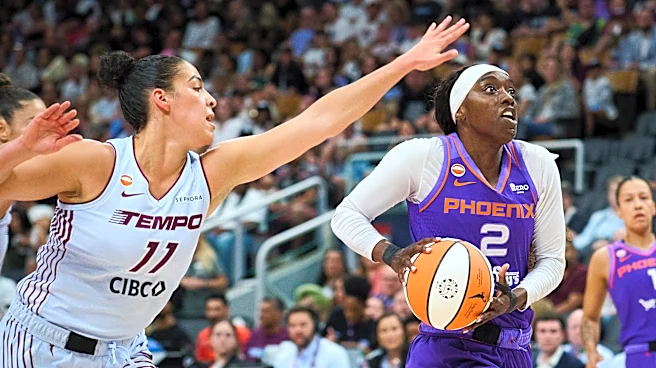


What's Happening?
The WNBA Players' Union has sparked controversy by declining to comment on an incident involving Indiana Fever guard Caitlin Clark and Phoenix Mercury forward Alyssa Thomas. During a recent game, Thomas was penalized with a one-game suspension and a $1,000
fine for a Flagrant 2 foul after making contact with Clark's throat. The incident has ignited discussions about Clark's treatment in the league, with some arguing that she faces unfair treatment on the court. Despite the league's clear stance on the foul, the union's non-committal response has added to the controversy. Notable figures, including U.S. Senator Chuck Grassley and broadcaster Dick Vitale, have publicly criticized the treatment Clark receives, emphasizing the need for fair officiating.
Why It's Important?
The incident highlights ongoing concerns about player safety and officiating standards in the WNBA. Caitlin Clark, a prominent figure in women's basketball, has been at the center of discussions regarding the physicality of the game and the protection of players. The union's silence on the matter raises questions about its role in advocating for player welfare. This situation could impact the league's reputation and its relationship with players, potentially influencing future policies on player conduct and safety. The broader implications for the WNBA include maintaining the integrity of the sport and ensuring that all players are treated equitably.
What's Next?
The WNBA may face increased pressure to address the concerns raised by this incident and to ensure consistent enforcement of rules regarding player conduct. The players' union might need to clarify its stance to maintain credibility among its members. Additionally, the league could consider reviewing its policies to prevent similar incidents and to protect players from undue physical harm. Stakeholders, including fans and sponsors, may demand more transparency and accountability from both the league and the union.
Beyond the Headlines
This incident underscores the challenges faced by women's sports in gaining equal recognition and respect. The treatment of Caitlin Clark could reflect broader societal issues regarding gender equity in sports. The WNBA's handling of this situation may influence public perception and support for women's basketball. Long-term, this could affect the league's growth and its ability to attract top talent.