







What's Happening?
Edible Garden AG Incorporated has announced its third fresh-herb distribution-center award from Walmart. This new agreement is set to broaden the availability of Edible Garden's products across additional Walmart stores located in the Eastern Midwest.
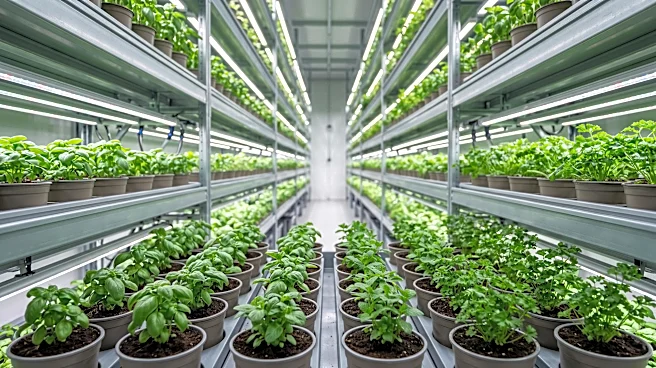
The company, a leader in controlled environment agriculture (CEA), utilizes its Zero-Waste Inspired® next-generation farming model to deliver organic and sustainable produce. This latest award follows two previous distribution center wins, signaling a strategic shift towards a more scalable distribution model. The primary goal of this expanded distribution is to enhance product freshness, improve fulfillment efficiency, and bolster supply-chain sustainability. This development provides a clear, company-specific talking point for Edible Garden, allowing stakeholders to assess the company's operational execution and strategic priorities within the retail sector.
Why It's Important?
This expansion is significant for Edible Garden as it solidifies its partnership with a major retailer like Walmart, potentially increasing its market share and brand visibility in the competitive fresh produce sector. For consumers in the Eastern Midwest, it means greater access to organic and sustainably grown fresh herbs, aligning with growing consumer demand for healthier and environmentally conscious food options. From an industry perspective, Edible Garden's focus on controlled environment agriculture and a Zero-Waste Inspired® model highlights a broader trend towards sustainable farming practices and localized food systems, which can reduce transportation costs and environmental impact. This move also demonstrates the increasing importance of efficient supply chains in the retail food industry, as companies strive to deliver fresher products to consumers while minimizing waste. The success of this distribution model could influence other agricultural companies to adopt similar strategies, promoting more sustainable and efficient food distribution across the U.S.
What's Next?
Following this third distribution award, Edible Garden will likely focus on the operational aspects of integrating its fresh herbs into the new Walmart distribution centers and subsequent retail locations. The market will be looking for verifiable disclosures from the company, such as measurable milestones, clearer timing for product rollout, and explanations of any dependencies not initially obvious. Investors and analysts will monitor company filings, prepared remarks, and conference-call transcripts for updates on how this development translates into tangible operating steps and financial outcomes. Management communication will be crucial in clarifying the impact of this expansion on the company's balance sheet, funding context, and overall growth strategy. The success of this expanded distribution could lead to further partnerships and a wider geographical reach for Edible Garden's products, potentially setting a precedent for other CEA companies seeking to scale their operations.
Beyond the Headlines
This development underscores a deeper shift in the U.S. food supply chain, emphasizing sustainability, efficiency, and consumer access to fresh, locally-sourced produce. Edible Garden's Zero-Waste Inspired® farming model represents a move towards more responsible resource management in agriculture, addressing concerns about food waste and environmental impact. The partnership with a large retailer like Walmart suggests a growing recognition within mainstream retail of the value of controlled environment agriculture and its potential to provide consistent, high-quality produce. This could lead to increased investment in CEA technologies and infrastructure across the country, fostering innovation in agricultural practices. Furthermore, the focus on improving product freshness and fulfillment efficiency could set new standards for the entire fresh produce industry, pushing competitors to adopt similar strategies to meet evolving consumer expectations and environmental regulations. This trend could ultimately contribute to a more resilient and sustainable national food system.