


What's Happening?
Southwest Airlines has undergone significant strategic and operational changes, including the introduction of assigned seating and new baggage fees, marking a departure from its long-standing customer policies. These transformations began in September
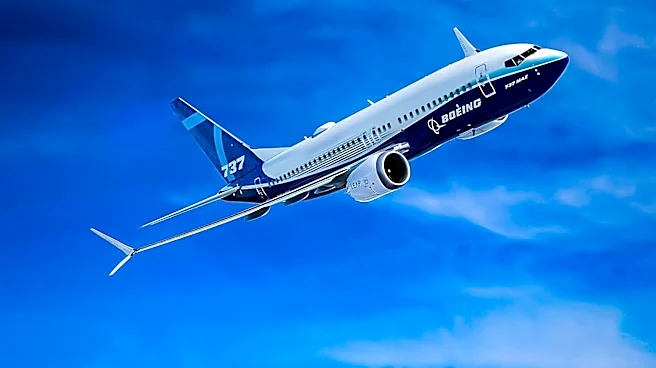
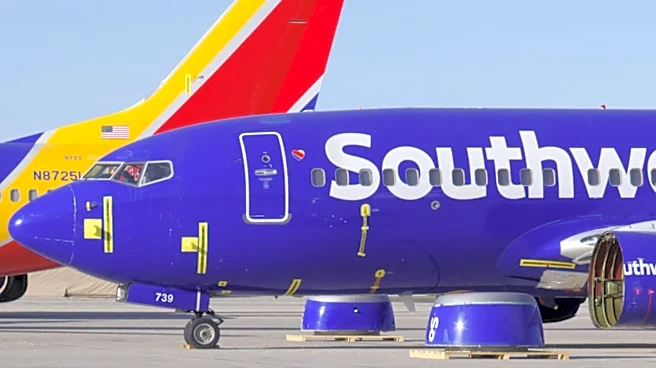
2024, following activist investor Elliott Investment Management disclosing an 11% stake and threatening a special shareholder meeting. A cooperation agreement was reached in October 2024, leading to board changes and the retention of CEO Bob Jordan. The airline announced it would replace open seating, charge for premium seating, add red-eye flights, and expand international partnerships. Effective May 28, 2025, Southwest ended its 'bags fly free' policy for new bookings, introducing fees of $35 for the first checked bag and $45 for the second. Assigned seating commenced on January 27, 2026, with booking opening in July 2025, featuring fare bundles, Extra Legroom seats, and paid priority boarding. These changes are part of a broader effort to repair margins under shareholder pressure, combining new revenue sources with cost and capital discipline. The airline also continued its fleet modernization, operating 803 Boeing 737s as of September 30, 2026, and taking deliveries of MAX aircraft while retiring older jets.
Why It's Important?
These policy shifts by Southwest Airlines are significant as they represent a fundamental change in its business model and brand identity, moving closer to practices adopted by other major U.S. carriers. For decades, Southwest differentiated itself with policies like open seating and free checked bags, which were central to its low-cost, customer-friendly image. The introduction of assigned seating and baggage fees could alter customer perception and loyalty, potentially alienating a segment of its traditional customer base who valued these unique offerings. Economically, these changes aim to boost revenue and improve profitability, as evidenced by the target of approximately $4 billion in incremental EBIT by 2027. However, the impact on unit costs (CASM-X) has been mixed, with increases in 2025 and Q3 2026, suggesting that while revenue is growing, operational efficiency remains a challenge. The transformation also highlights the increasing influence of activist investors in shaping corporate strategy, demonstrating how shareholder pressure can drive significant operational and policy overhauls in major U.S. companies.
What's Next?
Southwest Airlines will continue to optimize its business following the completion of its transformation efforts by Q3 2026. The airline's focus will likely be on refining its new revenue streams, such as premium seating and baggage fees, and assessing their long-term impact on customer satisfaction and financial performance. The company's guidance for full-year 2026 adjusted earnings per share was lowered from initial projections, indicating that the full benefits of the transformation are still developing and subject to market conditions. Future steps may involve further adjustments to fare bundles and loyalty programs based on customer feedback and competitive responses. The airline will also need to manage the integration of its new operational strategies, such as increased aircraft utilization through red-eye flights and faster turnarounds, to ensure operational reliability, especially after the significant disruption experienced in December 2022. The ongoing fleet modernization with Boeing 737 MAX deliveries will also play a role in its future capacity and cost structure.
Beyond the Headlines
The transformation at Southwest Airlines extends beyond immediate financial and operational adjustments, touching upon deeper implications for brand identity and competitive dynamics in the U.S. airline industry. By adopting policies similar to its competitors, Southwest risks diluting its unique brand proposition, which historically resonated with budget-conscious travelers seeking simplicity and transparency. The shift raises questions about what now differentiates Southwest in a crowded market, moving from a policy-driven distinction to competing on a menu of choices already offered by other carriers. This could lead to a more homogenized airline experience across the industry, potentially intensifying competition based solely on price or network rather than unique customer policies. Furthermore, the case underscores the evolving relationship between corporate governance and shareholder activism, where investor demands for profitability can lead to significant strategic pivots, even for companies with strong historical brand loyalty. The long-term success of Southwest's transformation will depend on its ability to balance increased revenue generation with maintaining a distinct value proposition that continues to attract and retain customers in a highly competitive environment.