






What's Happening?
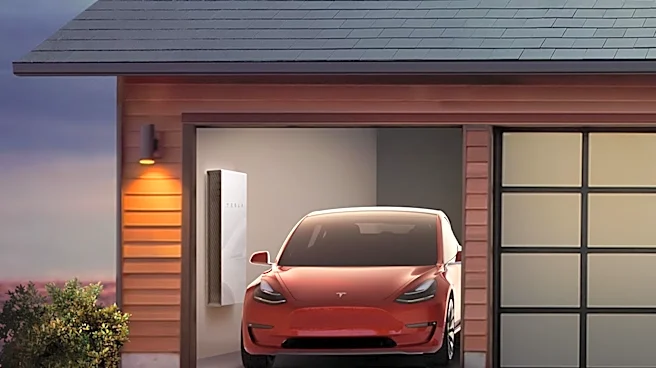
Home battery installations are increasing rapidly in states like California, Texas, and Hawai'i, driven by high electricity costs and the need for energy independence. In the first quarter of 2026, U.S. homeowners installed a record 673 megawatts of battery capacity.
These batteries allow homeowners to store electricity during low-cost periods and use it when rates are higher, often in conjunction with solar panels. This trend is supported by state policies that incentivize battery adoption, such as California's higher value for electricity sent back to the grid after sunset and Hawai'i's one-time payment for installed battery capacity.
Why It's Important?
The rise in home battery installations reflects a growing shift towards energy self-sufficiency and resilience against power outages. By integrating batteries into virtual power plants, grid operators can manage energy demand more effectively, reducing reliance on traditional power plants and enhancing local energy resilience. This trend is significant as it aligns with broader efforts to transition to renewable energy sources and reduce carbon emissions. For consumers, the ability to lower energy costs and maintain power during outages offers both financial and practical benefits. The increasing adoption of home batteries could also stimulate economic growth in the renewable energy sector.