




What's Happening?
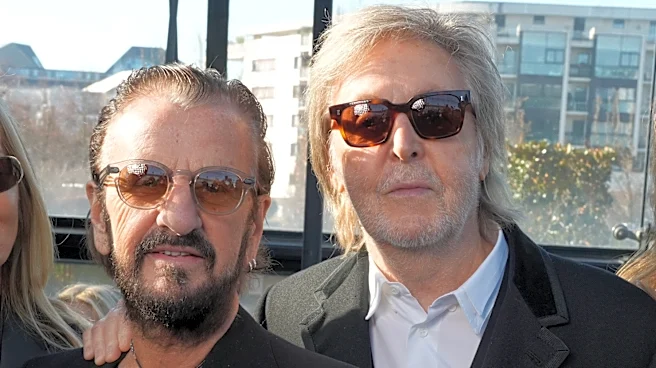
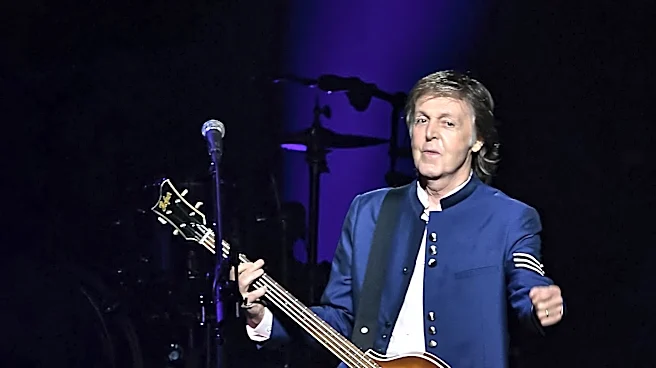
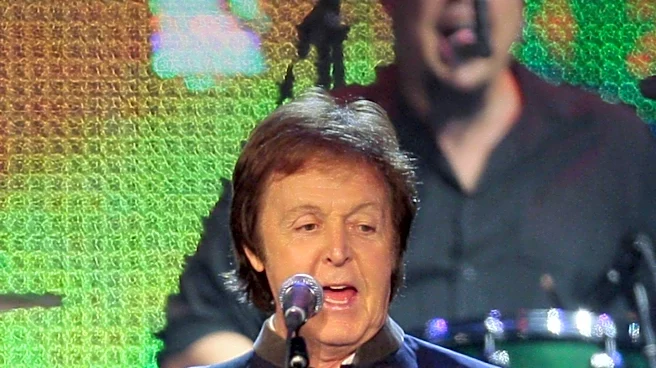
Sir Paul McCartney, the 84-year-old Beatles icon, has reportedly achieved billionaire status, placing him as the third wealthiest musical artist globally. According to data published by Forbes, McCartney's net worth is estimated at a minimum of $1.4 billion.
This figure positions him behind Taylor Swift, with an estimated $2 billion, and Jay-Z, who leads with $2.8 billion. A significant portion of McCartney's expanding fortune is attributed to MPL Communications, a publishing venture he launched in 1969 before the Beatles disbanded. This business is currently estimated to be worth at least a quarter of a billion dollars. His annual revenue is also driven by royalty rights for various songs, theatrical scores, lucrative music catalogs, global tour receipts, extensive UK real estate holdings, and a private art collection.
Why It's Important?
Sir Paul McCartney's reported entry into the billionaire club highlights the enduring financial power of legacy artists and the diverse revenue streams available in the music industry. His wealth accumulation, significantly bolstered by publishing rights and a long-standing business venture like MPL Communications, underscores the importance of intellectual property ownership for musicians. This achievement also places him in an elite tier of global musical artists, demonstrating the immense financial success attainable through a combination of creative output, strategic business management, and sustained career longevity. The comparison with contemporary artists like Taylor Swift and Jay-Z illustrates the different paths to extreme wealth in music, from touring and new releases to diversified business empires and catalog acquisitions. This financial milestone for McCartney reinforces the economic significance of music as a global industry.
What's Next?
While Sir Paul McCartney has not commented on the Forbes assessment, his continued financial success is likely to inspire discussions within the music industry about wealth management, intellectual property, and the long-term value of artistic catalogs. His example may encourage other artists to prioritize ownership of their work and explore diverse investment opportunities. For fans and the public, this news further solidifies his legendary status, not just as a musical innovator but also as a shrewd businessman. Future financial reports and industry analyses will likely continue to track the wealth of top musicians, with McCartney serving as a benchmark for sustained financial success in the entertainment world. His ongoing tours and projects will continue to contribute to his net worth, maintaining his position as a significant economic force in music.
Beyond the Headlines
McCartney's reported billionaire status transcends mere financial figures, offering insights into the cultural and economic value of enduring artistry. His ability to generate substantial wealth decades after his initial breakthrough with The Beatles speaks to the timeless appeal of his music and the power of a well-managed artistic legacy. The story also subtly highlights the shift in how artists can monetize their work, moving beyond just record sales to encompass publishing, touring, licensing, and even real estate and art investments. This diversification of assets provides a model for long-term financial stability in a volatile industry. Furthermore, his personal philosophy of being a 'playaholic' rather than a 'workaholic' suggests a deep passion for his craft that, ironically, has led to immense financial success, blurring the lines between creative fulfillment and economic prosperity.