


What's Happening?
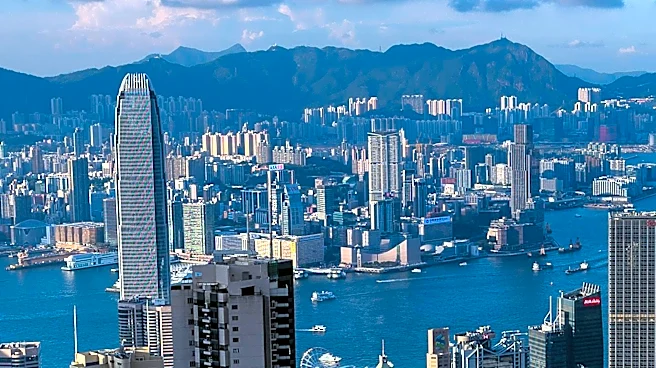
Hong Kong's Chief Executive, John Lee Ka-chiu, has declared the city's commitment to being a 'trusted partner' in fostering Central Asia's emergence as a global growth engine. Speaking virtually at the South China Morning Post’s China Conference: Central Asia 2026
in Astana, Lee highlighted significant outcomes from his June delegation to the region. These include a Hong Kong bank providing US$785 million in financing to the Development Bank of Kazakhstan, Kazakhstan’s national rail operator KTZ filing to list in Hong Kong, and a local family office signing an agreement to enhance cooperation in sustainable energy with Central Asian authorities. Lee emphasized the immense potential of Central Asian countries, which are key economies within Chinese President Xi Jinping's 2013 Belt and Road Initiative, for global businesses seeking diversification and stronger international connections. He stressed Hong Kong's readiness to connect markets, finance sustainable growth, and facilitate cross-boundary trade.
Why It's Important?
This initiative is important as it underscores Hong Kong's strategic role in supporting China's broader Belt and Road Initiative, which aims to expand global trade and influence. By positioning itself as a financial and trade hub for Central Asia, Hong Kong can strengthen its economic ties with a region rich in resources and emerging markets. This move could lead to increased investment opportunities for U.S. businesses looking to engage with Central Asian economies through Hong Kong, potentially offering a gateway to these markets. Conversely, it also highlights the growing economic integration between China, Hong Kong, and Central Asia, which could shift global trade dynamics and influence supply chains. The financial backing and infrastructure development facilitated by Hong Kong could enhance the economic stability and growth of Central Asian nations, potentially creating new avenues for international cooperation and competition.
What's Next?
Following these initial agreements, further financial and trade collaborations between Hong Kong and Central Asian countries are anticipated. The listing of Kazakhstan's national rail operator in Hong Kong suggests a trend towards increased Central Asian companies seeking capital and market access through Hong Kong's financial infrastructure. This could lead to more direct investment and trade flows between the regions. Additionally, the focus on sustainable energy cooperation indicates a potential for green technology and infrastructure development, which might attract international partners. Hong Kong will likely continue to host and participate in conferences and delegations to solidify its role as a key facilitator for the Belt and Road Initiative in Central Asia, aiming to expand its influence and economic footprint in the region.
Beyond the Headlines
Beyond the immediate economic benefits, Hong Kong's active role in the Belt and Road Initiative in Central Asia carries broader geopolitical implications. It reinforces China's strategic vision for a more interconnected global economy, with Hong Kong serving as a crucial financial and logistical node. This engagement could also be seen as an effort by Hong Kong to reassert its international relevance and economic dynamism, particularly in the context of evolving geopolitical landscapes. The emphasis on 'trusted partner' status suggests an attempt to build long-term relationships and foster mutual development, which could counter narratives of purely transactional engagements. The success of these ventures could further integrate Central Asian economies into a China-centric economic sphere, potentially influencing regional power dynamics and trade routes for decades to come.