
What's Happening?
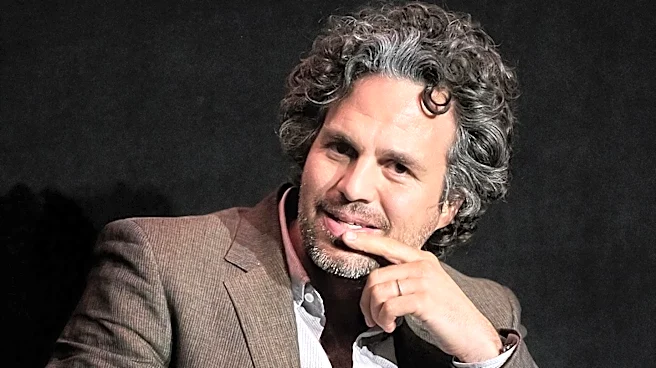
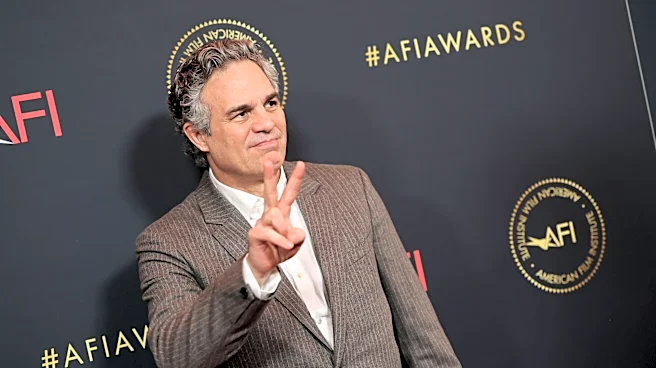
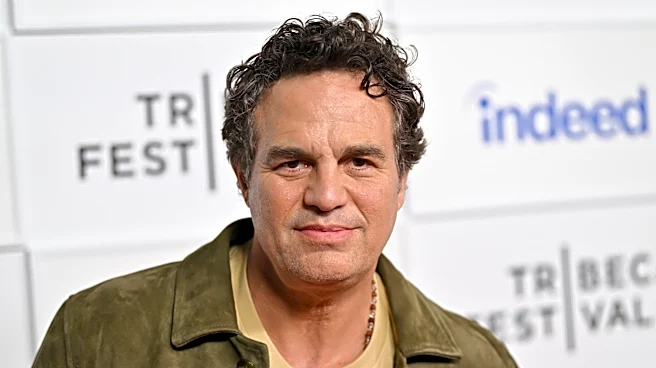
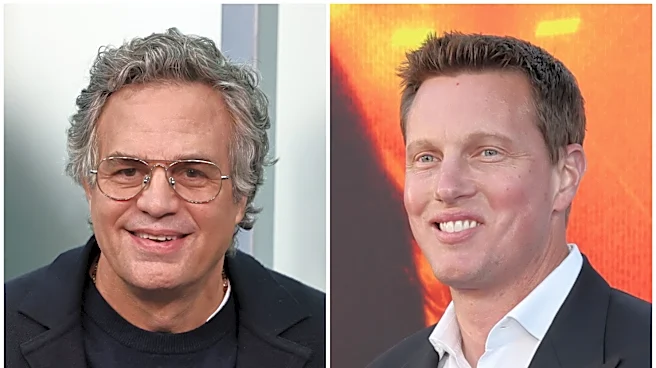
Jim Berk, CEO of the Simon Wiesenthal Center, has publicly defended Paramount's stance against actor Mark Ruffalo's recent comments, which the studio labeled as 'antisemitic.' Ruffalo, an outspoken critic of Paramount's proposed $111 billion merger with
Warner Bros., had linked Paramount to Oracle's alleged ties with the Israeli military, referencing a 2024 clip where former Oracle chief Safra Catz discussed 'profoundly scary technologies' developed for Israel's war efforts in Gaza. Ruffalo further described the conflict as a 'genocide' built on an 'apartheid system of oppression powered by Oracle.' Paramount responded by calling Ruffalo's remarks 'antisemitic tropes' and a 'bridge too far,' emphasizing that such language cheapens the suffering it purports to describe. Berk commended Paramount for its 'moral clarity' in drawing a line against what he termed 'prejudice masquerading as political or corporate criticism,' asserting that invoking Israel in an irrelevant context is a 'textbook case of obsession and demonization.'
Why It's Important?
This incident highlights the increasing tension and sensitivity surrounding discussions of the Israeli-Palestinian conflict within U.S. corporate and entertainment spheres. The Simon Wiesenthal Center's intervention underscores a broader concern about the potential for criticism of Israeli policies or corporate dealings to be perceived or framed as antisemitism. This dynamic can stifle open debate and create a chilling effect on public discourse, particularly for figures in the entertainment industry who often use their platforms to express political views. The accusation of antisemitism, especially from a prominent organization like the Simon Wiesenthal Center, carries significant weight and can have professional repercussions for individuals like Mark Ruffalo. Conversely, Paramount's strong rebuttal and the subsequent support from the Simon Wiesenthal Center demonstrate a corporate and advocacy effort to define and counter what they consider to be antisemitic rhetoric, particularly when it intersects with business transactions and geopolitical issues. This situation also reflects the ongoing challenge of distinguishing legitimate criticism of a state's actions from prejudice against a religious or ethnic group.
What's Next?
Following the Simon Wiesenthal Center's statement, the debate surrounding Mark Ruffalo's comments and Paramount's response is likely to continue within Hollywood and broader public discourse. Creative Community for Peace, a pro-Israel advocacy group, has already called for a boycott of Ruffalo until he retracts and apologizes for his remarks, indicating potential professional consequences for the actor. Ruffalo, for his part, has dismissed Paramount's claims as 'appalling and fundamentally dishonest,' asserting that criticizing the actions of the Israeli prime minister or military technology contracts is distinct from criticizing Jewish people. This suggests a continued defense of his position and a refusal to retract his statements. The ongoing public exchange could lead to further statements from other advocacy groups, industry figures, or even a more formalized response from Paramount regarding its stance on such criticisms. The incident may also prompt other public figures to be more cautious or deliberate in their political statements, particularly concerning sensitive international conflicts, to avoid similar accusations.
Beyond the Headlines
This controversy delves into the complex interplay between freedom of speech, corporate responsibility, and the sensitive issue of antisemitism in the context of international conflict. The use of terms like 'genocide' and 'apartheid' by Ruffalo, and their subsequent rejection by Paramount and the Simon Wiesenthal Center as 'antisemitic tropes,' highlights a significant semantic battleground. This struggle over language reflects deeper ideological divisions and the difficulty of discussing the Israeli-Palestinian conflict without invoking highly charged terms that can be interpreted in multiple ways. The incident also raises questions about the role of corporations in policing the political speech of individuals associated with them, and the extent to which business disputes can become entangled with geopolitical narratives. Furthermore, it underscores the growing pressure on public figures to navigate complex global issues, often under intense scrutiny, and the potential for their statements to be amplified and interpreted through various lenses, leading to accusations of prejudice or bias. The broader implication is a continued polarization of discourse, where nuanced discussions are often overshadowed by strong accusations and counter-accusations.