
What's Happening?
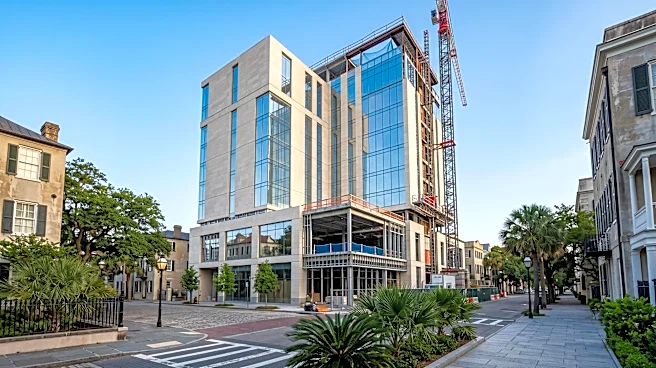
Charleston’s Board of Architectural Review is set to examine updated plans for a 300-room hotel at 411 Meeting St. The site, currently an empty lot used for parking, will be the subject of the board's
first formal review of the revised designs. This scaled-back proposal is a result of a compromise that removed a previous requirement to include 159 apartments within the project, relocating them to a separate lot at 82 Mary St. The new design for 411 Meeting St. now exclusively features a nine-story hotel, which includes a two-story conference wing. This wing is planned to house bars, restaurants, a spa, and retail space. The redesign necessitated a return to the board for approval due to the significant change in the project's scope and composition.
Why It's Important?
The revised plans for the 300-room hotel on Meeting Street are significant for Charleston's urban development and local economy. The removal of the housing requirement from the 411 Meeting St. project and the subsequent relocation of apartments to Mary Street reflect ongoing debates about balancing commercial development with residential needs in rapidly growing urban areas. While a hotel-only development could boost tourism and create jobs in the hospitality sector, some residents express concerns about the impact on local character and the focus on tourists over "Charlestonians." This project highlights the tension between economic growth driven by tourism and the desire to maintain a community-centric environment. The Board of Architectural Review's decision will set a precedent for future large-scale developments in the city, influencing the balance between commercial interests and community welfare.
What's Next?
The Charleston Board of Architectural Review will conduct its formal review of the revised hotel-only plans for 411 Meeting St. The board will compare the new designs with earlier proposals to assess their suitability and adherence to architectural standards. Approval from the board is a critical next step before construction can commence. The decision will likely be closely watched by local residents, business owners, and developers, as it will indicate the city's direction regarding large-scale commercial projects and the integration of tourism infrastructure within urban neighborhoods. Depending on the outcome, there could be further public discourse or adjustments to the plans, especially if resident concerns about the impact on the Upper Peninsula are strongly voiced.
Beyond the Headlines
The debate surrounding the 300-room hotel on Meeting Street, particularly the removal of the housing component, underscores a broader national challenge faced by many historic and tourist-heavy cities: how to manage growth while preserving local identity and addressing housing affordability. The compromise to move apartments to a separate location suggests a piecemeal approach to urban planning, which might alleviate immediate pressure but could also lead to segregated development patterns. This situation raises questions about the long-term vision for Charleston's Upper Peninsula and whether current development strategies adequately serve the diverse needs of its population. The focus on tourism-driven businesses, while economically beneficial, can sometimes overshadow the needs of permanent residents, leading to concerns about gentrification and the erosion of local culture. The outcome of this project could influence future policy discussions on mixed-use development and the role of residential components in large commercial ventures in similar U.S. cities.