



What's Happening?
Backyard landscaping projects in the U.S. can range significantly in cost, with options available for various budgets from simple upgrades to comprehensive makeovers. For instance, a budget of $10,000 typically allows for a focused makeover centered on one
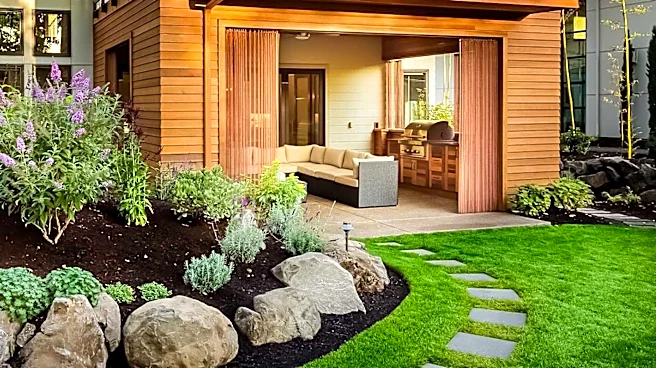
well-finished zone, such as a compact gravel terrace or a refreshed concrete slab. This tier often relies on homeowner involvement for tasks like planting and mulching. Moving up, a $25,000 budget enables a more designed yard with a planned layout, larger paver or poured-concrete patios, layered planting, and functional path and patio lighting. At the higher end, a $50,000 budget can support a custom outdoor room, incorporating detailed drawings, premium paving, mature planting, integrated irrigation, and layered lighting schemes. Key cost drivers include hardscaping, which often consumes the largest portion of the budget due to material and base preparation needs, and plant choices, which offer more flexibility in scaling costs.
Why It's Important?
The varying costs and approaches to backyard landscaping highlight the significant economic activity within the U.S. home improvement and landscaping sectors. This flexibility in budgeting allows a broad spectrum of homeowners to invest in their properties, contributing to local economies through material purchases, labor, and specialized services. For homeowners, landscaping improvements can enhance property value, improve quality of life, and provide functional outdoor spaces. The emphasis on phased renovations and strategic spending, particularly on foundational elements like drainage and irrigation, underscores a growing consumer awareness of long-term value and sustainability in home investments. Furthermore, the ability to adjust material choices and project scope means that landscaping services remain accessible across different income levels, supporting a diverse market for contractors and suppliers.
What's Next?
Homeowners planning backyard landscaping projects are advised to prioritize their primary use for the yard before budgeting, whether it's for dining, gardening, or recreation. Obtaining comparable bids that allow for material adjustments is crucial for managing costs effectively. For complex sites with issues like standing water or significant slopes, investing in professional design help upfront can prevent costly mistakes during construction. Phased renovation plans are recommended, starting with irreversible foundations like drainage correction and buried utilities, followed by more flexible elements like planting and decorative fixtures. This strategic approach ensures that essential structural work is completed first, allowing homeowners to add aesthetic elements over time as budgets permit, thereby maximizing their investment and achieving a cohesive outdoor space.
Beyond the Headlines
Beyond the immediate financial implications, backyard landscaping projects reflect broader societal trends in the U.S., including an increased focus on outdoor living spaces and environmental consciousness. The discussion of xeriscape landscaping in areas like Sandy, UT, for example, points to a growing demand for water-efficient designs in response to climate concerns and water conservation efforts. This shift not only impacts the types of plants and materials used but also drives innovation in irrigation technologies. The integration of elements like outdoor kitchens, hot tubs, and meditation spaces in residential backyards signifies a cultural shift towards creating multi-functional outdoor 'rooms' that extend the living area of a home. These trends suggest a long-term evolution in how Americans view and utilize their private outdoor spaces, moving beyond purely aesthetic considerations to embrace functionality, sustainability, and personal well-being.