



What's Happening?
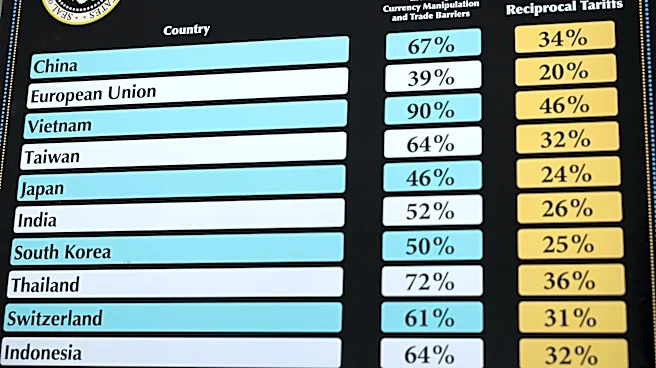
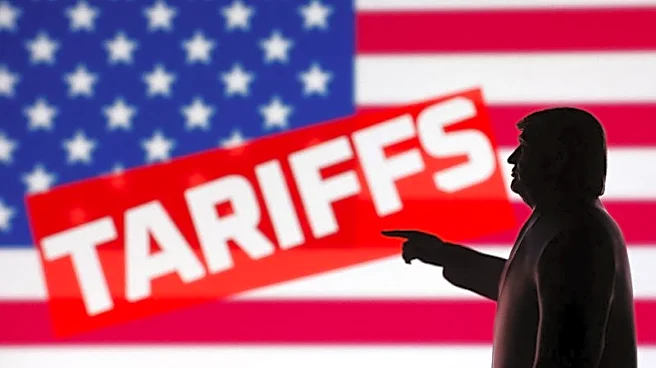
Interactive Brokers has observed significant market volatility, characterized by a 'get me out' sentiment among investors, following new tariff announcements by the Trump administration. These tariffs target China, the European Union, and other key trading
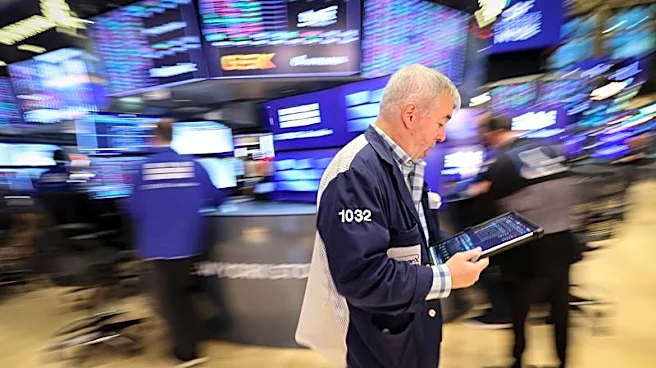
partners. The market reaction, particularly on the day before a holiday, indicates widespread concern. Pre-market futures had already shown declines due to tech-led drops in Asian markets, which were further exacerbated by the tariff news. Despite the broad market downturn, defensive sectors such as consumer staples, energy, and utilities have shown resilience. Institutional investors appear to be rotating out of technology stocks and into these more stable sectors, suggesting a broader trend towards risk-off strategies. The S&P 500 (SPX) has seen decliners outpace advancers, with a critical level of SPX 7,000 being tested as both support and resistance.
Why It's Important?
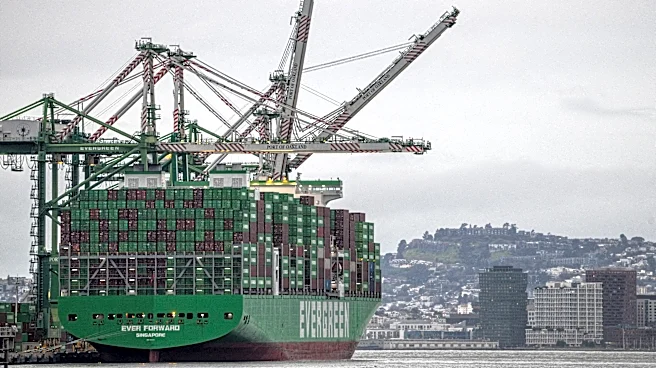
The new tariffs introduced by the Trump administration are having an immediate and notable impact on U.S. financial markets, leading to increased volatility and a shift in investment strategies. This development is crucial for U.S. industries, particularly those reliant on international trade, as tariffs can increase costs for imported goods and potentially reduce demand for exported products. The rotation of institutional investors from technology to defensive sectors signals a cautious outlook on the economy, which could affect funding and growth prospects for tech companies. The market's negative reaction, especially on a day typically quiet before a holiday, underscores the sensitivity of financial markets to trade policy changes. This situation highlights how government policy decisions can directly influence investor confidence and market behavior, potentially leading to broader economic implications.
What's Next?
The immediate future will likely see continued market scrutiny of the newly announced tariffs and any subsequent reactions from affected trading partners. Investors will be closely watching for further policy statements from the Trump administration and responses from China and the European Union, which could either escalate or de-escalate trade tensions. The performance of the S&P 500, particularly around the 7,000 level, will be a key indicator of market sentiment. Should the tariffs remain or expand, U.S. businesses involved in international supply chains may need to re-evaluate their strategies, potentially leading to shifts in sourcing and production. The ongoing rotation into defensive sectors suggests that this cautious investment approach may persist, impacting the valuation and growth trajectories of various industries.
Beyond the Headlines
The market's strong negative reaction to the tariffs extends beyond immediate financial losses, reflecting deeper concerns about global trade stability and economic predictability. The timing of these announcements, just before a major holiday, could be interpreted as a strategic move to minimize immediate public and political backlash, or it could simply indicate a lack of consideration for market timing. This event also highlights the significant influence of presidential administrations on economic sentiment and market behavior, demonstrating how policy decisions can create ripple effects across various sectors. The shift towards defensive stocks suggests a broader re-evaluation of risk in the investment community, potentially signaling a period of increased economic uncertainty and a re-prioritization of stability over growth in investment portfolios. This could lead to long-term changes in how U.S. companies approach international trade and investment.