




What's Happening?
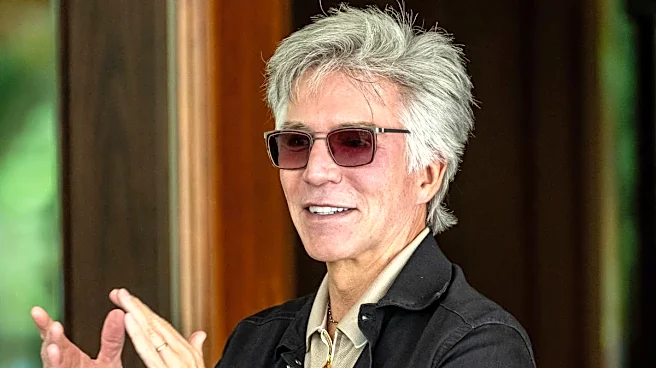
In the second quarter, several prominent hedge funds, including those managed by Seth Klarman of Baupost and Paul Singer of Elliott Investment Management, significantly increased their holdings in Norwegian Cruise Lines Holdings (NCLH). This surge in investment
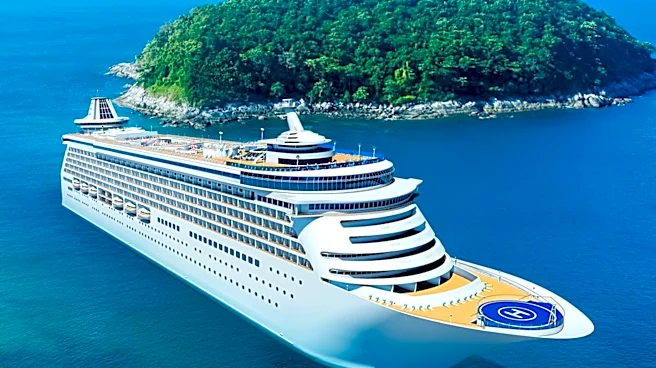
comes as NCLH shares are trading approximately 72% below their pre-COVID highs. The company, valued at $7.7 billion, is actively shifting its strategy towards developing and acquiring ultra-luxury mega-ships to enhance its competitiveness in the cruise market. This strategic pivot aims to position Norwegian Cruise Lines to better compete with larger rivals like Royal Caribbean, which has seen substantial growth in recent years. Despite a challenging period for NCLH, marked by pandemic-era dilution and increased debt, the new management team is focused on cost-cutting, debt reduction, and expanding its fleet with higher-end vessels to attract premium bookings.
Why It's Important?
This increased hedge fund interest in Norwegian Cruise Lines Holdings signals a potential deep-value opportunity within the U.S. travel and leisure sector. The investment by 'smart money' managers like Klarman and Singer suggests a belief in NCLH's long-term recovery and its strategic shift towards luxury cruising. For the broader U.S. economy, a rebound in the cruise industry, particularly in the premium segment, could indicate renewed consumer confidence in discretionary spending and experiential travel. This trend could benefit related industries such as hospitality, tourism, and shipbuilding. The success of NCLH's pivot could also influence other cruise operators to re-evaluate their fleet strategies and market positioning, potentially leading to increased investment in luxury offerings across the sector. Conversely, if NCLH struggles to execute its strategy amidst high debt and capital-intensive expansion, it could signal ongoing challenges for mid-sized players in a market dominated by larger competitors.
What's Next?
Norwegian Cruise Lines Holdings is expected to continue its efforts to expand its fleet with new, fully-loaded premium ships, with orders already placed for several vessels. The company's management will focus on cost control, balance sheet repair, and marketing initiatives to attract bookings for its evolving luxury offerings. Investors will closely monitor NCLH's financial performance, particularly its ability to generate positive free cash flows and reduce its debt burden. The success of its premium shift will be crucial for an eventual re-rating of its stock. Potential reactions from major stakeholders include continued scrutiny from bond investors regarding debt levels and interest rates, and competitive responses from rival cruise lines as NCLH aims to capture a larger share of the luxury market. The broader economic environment, including inflation and consumer discretionary spending, will also play a significant role in the company's trajectory.
Beyond the Headlines
The strategic shift by Norwegian Cruise Lines Holdings towards ultra-luxury mega-ships highlights a broader trend in the U.S. travel industry: the increasing demand for premium and experiential travel. This move reflects a recognition that while the mass market cruise segment faces challenges, there is a resilient and growing appetite for high-end, unique travel experiences. This could lead to a bifurcation of the cruise market, with operators either focusing on cost-effective, high-volume offerings or exclusive, luxury experiences. The ethical implications of building increasingly large and opulent ships, often referred to as 'moving cities on water,' could also come under scrutiny, particularly concerning environmental impact and resource consumption. Furthermore, the reliance on 'smart money' hedge funds for a potential rebound raises questions about market efficiency and the influence of institutional investors on corporate strategy and valuation in the post-pandemic era.