






What's Happening?
USA Fencing's Board of Directors has voted to eliminate the P-Yellow card for non-combativity, effective October 1, 2026. This change aligns USA Fencing rules with those approved at the 2025 FIE Congress. Previously, non-combativity involved a three-step
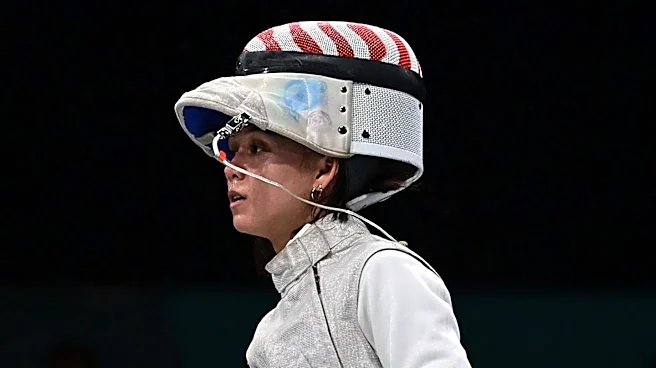
penalty progression: P-Yellow, P-Red, then P-Black. Under the new rules, the P-Yellow card is removed, streamlining the progression to P-Red followed by P-Black. A P-Red card now immediately follows one minute of non-combativity, awarding a touch against both fencers. The definition of non-combativity—one minute of fencing without a touch—remains unchanged. The first national event to operate under these new rules will be the October NAC, scheduled for October 9-12 at the Orange County Convention Center in Orlando, Florida. Additionally, new safety measures are being implemented, including explicit penalties for appearing on the strip without a secondary safety device or strap on a mask (t.72) and requiring full fencing equipment for practice bouts, and chest protectors for fencers and long pants for coaches during lessons (t.20).
Why It's Important?
This rule change is significant for the competitive landscape of fencing in the United States, particularly for athletes, coaches, and referees. By removing the P-Yellow card, the penalty for non-combativity becomes more immediate and impactful, potentially encouraging more aggressive and decisive action during bouts. This could alter strategic approaches to fencing, as fencers will face a P-Red card—which awards a touch to the opponent—sooner than before. The alignment with FIE rules ensures consistency for U.S. fencers competing internationally, reducing confusion and promoting a unified standard of play. The new safety regulations, such as mandatory mask straps and specific equipment for warm-ups and lessons, underscore a commitment to athlete well-being. These measures aim to prevent injuries and standardize safety protocols across all USA Fencing events, enhancing the overall integrity and safety of the sport. The changes will require athletes and coaches to adapt their training and competitive strategies to avoid penalties and ensure compliance with safety standards.
What's Next?
The new rules will take effect on October 1, 2026, with the October NAC in Orlando being the first major national event to implement them. Athletes and coaches are advised to review the updated progression for non-combativity and the new equipment requirements before participating in upcoming competitions. The Referees' Commission will provide additional guidance to officials ahead of the October NAC to ensure consistent application of the new rules. This period will serve as a crucial adjustment phase for the entire USA Fencing community. Stakeholders, including athletes, coaches, and referees, are encouraged to contact the Referees’ Commission with any questions regarding the updated rules. The implementation of these changes will be closely monitored to assess their impact on the flow of bouts, athlete behavior, and overall safety within the sport.
Beyond the Headlines
The elimination of the P-Yellow card reflects a broader trend in sports to streamline rules and enhance the spectator experience by promoting more dynamic and engaging play. By reducing the number of warnings, fencing aims to minimize passive periods and encourage continuous action, which could make the sport more appealing to audiences. This shift also highlights the ongoing effort to balance competitive integrity with athlete safety, as evidenced by the simultaneous introduction of stricter equipment rules. The decision to align with FIE rules demonstrates a commitment to global standards, which is crucial for the development of U.S. fencers on the international stage. This move could also influence how non-combativity is perceived and managed in other combat sports, potentially setting a precedent for more direct penalty systems. The emphasis on safety, particularly for equipment, underscores a proactive approach to athlete welfare, which is becoming increasingly important across all levels of competitive sports.