


What's Happening?
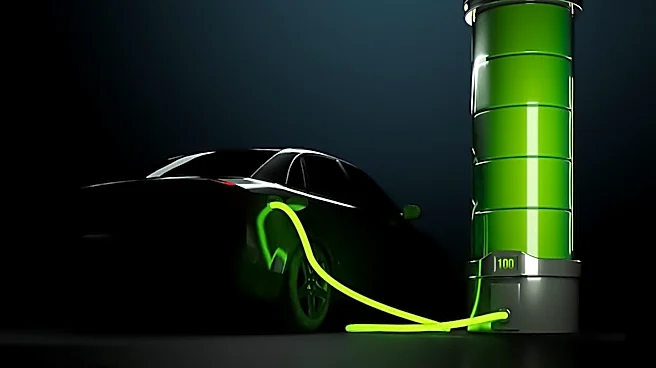
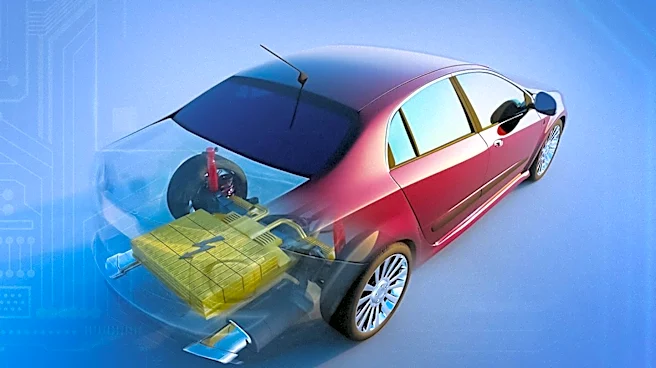
Chinese automaker Geely is poised to introduce advanced solid-state batteries with a range exceeding 621 miles and a lifespan of up to 621,000 miles, with pilot testing scheduled to begin next year. These batteries boast a power density of up to 500 Wh/kg
and are expected to be integrated into vehicles from Geely's various brands, including Zeekr, Lynk & Co, Volvo, Polestar, Lotus, and Smart. However, due to heavy U.S. tariffs on cars from China, these innovative batteries are unlikely to be available in the American market. Despite this, U.S. automakers like Stellantis, Karma, Ford, and General Motors are actively developing their own solid-state battery technologies, with Ford and GM also focusing on more cost-effective lithium manganese rich (LMR) chemistries for near-term applications.
Why It's Important?
The development of long-range, durable solid-state batteries by Geely represents a significant technological leap in the electric vehicle (EV) industry, potentially addressing key consumer concerns about range anxiety and battery longevity. The U.S. tariffs on Chinese vehicles, however, create a barrier that prevents American consumers from accessing these advancements, potentially slowing the adoption of cutting-edge EV technology in the U.S. This situation highlights the impact of trade policies on technological diffusion and market competition. While U.S. automakers are pursuing their own solid-state battery research, the absence of direct competition from advanced Chinese offerings could influence the pace of innovation and market availability of such technologies within the U.S. The focus by Ford and GM on cheaper chemistries also indicates a strategic decision to balance innovation with affordability in the U.S. market.
What's Next?
Geely plans to begin pilot testing its solid-state batteries in vehicles from its various brands starting next year. The company has not yet confirmed when mass production will commence or when these vehicles will be available to consumers. In the U.S., domestic automakers will continue their independent research and development efforts in solid-state battery technology. The ongoing U.S. tariffs on Chinese vehicles are expected to remain a significant factor, limiting the direct import of Geely's advanced EV technology. The future availability of solid-state batteries in the U.S. market will largely depend on the success of domestic R&D, potential shifts in trade policy, and the ability of U.S. manufacturers to scale production of these advanced battery types. The industry will be watching for breakthroughs from companies like Factorial, which is collaborating with Stellantis and Karma.
Beyond the Headlines
The divergence in EV battery technology availability between the U.S. and China, driven by trade tariffs, points to a broader trend of technological decoupling. This situation could lead to different technological ecosystems and standards emerging in major global markets, potentially complicating future international collaborations and market integration. The emphasis on domestic battery development in the U.S. is a strategic move to enhance energy independence and secure critical supply chains, but it also raises questions about the efficiency of innovation when global competition is restricted. Furthermore, the long lifespan and high energy density of Geely's batteries could set new benchmarks for the EV industry, putting pressure on all manufacturers to accelerate their own advancements to remain competitive in the long run, regardless of trade barriers.