
What's Happening?
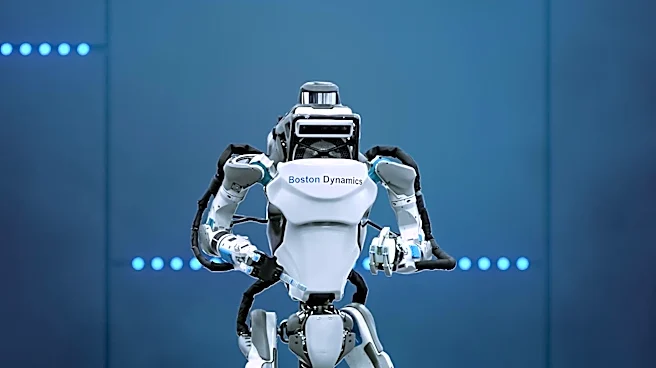
GlobalFoundries (GF) announced plans to begin testing Boston Dynamics' Atlas humanoid robots in its chip fabrication plants starting in early 2027. This initiative marks GF as the first manufacturing customer
outside the automotive sector to participate in Atlas's early adopter program. The agreement also includes an expansion of GF's existing fleet of Boston Dynamics' Spot inspection robots, building on several years of collaboration. Workshops are planned between GF and Boston Dynamics to assess potential tasks for Atlas, evaluate site readiness, and determine how the robots will integrate into plant operations. These workshops will also cover early task testing and training. While the exact number of Atlas robots, their initial tasks, specific trial areas, or a date for routine operations have not been disclosed, the expansion of Spot robots will cover GF facilities in Malta, New York; Burlington, Vermont; Dresden, Germany; and Singapore. GF's Burlington plant has already been utilizing Spot robots for over four years, with two Spot robots in Singapore having traveled nearly 900 kilometers and performed over 90,000 sub-fab inspections since April, achieving a 99% mission success rate.
Why It's Important?
This collaboration is significant as it extends Boston Dynamics' Atlas robot deployments beyond its majority shareholder, Hyundai Motor Group, and development partner Google DeepMind, into the semiconductor manufacturing industry. It provides Boston Dynamics with a crucial opportunity to demonstrate the adaptability of Atlas's training and integration capabilities to a customer with distinct operational requirements, particularly in environments demanding strict cleanliness and chemical controls. For GlobalFoundries, integrating humanoid robots like Atlas could potentially enhance efficiency, automate hazardous tasks, and improve safety in its highly controlled cleanroom environments. The semiconductor industry, with its complex manufacturing processes and stringent safety protocols, presents a unique challenge and opportunity for advanced robotics. Success in this sector could pave the way for broader adoption of humanoid robots in other high-tech manufacturing industries, potentially reducing human exposure to dangerous chemicals and improving overall operational consistency. The expansion of Spot robots, which have already demonstrated high mission success rates in GF's facilities, further underscores the potential for robotics to revolutionize industrial inspection and maintenance.
What's Next?
The immediate next steps involve workshops between GlobalFoundries and Boston Dynamics to define the scope of Atlas's deployment. These workshops will focus on identifying suitable tasks, assessing the readiness of GF's facilities, and planning the integration of Atlas into existing plant operations. Early task testing and training will also be a critical phase. The performance of Atlas in GF's fabs will be closely monitored, especially concerning its ability to operate within strict cleanliness and chemical safety parameters. Future milestones will include the definition of specific tasks for Atlas and the measurement of its performance against established metrics, such as completion rates without human intervention, operator interventions, recovery times, and overall work output. The success of these trials could lead to a more widespread deployment of Atlas robots within GlobalFoundries and potentially influence other semiconductor manufacturers to explore similar robotic solutions. Boston Dynamics will also be looking to leverage the insights gained from this partnership to refine Atlas's capabilities and integration strategies for other industrial applications.
Beyond the Headlines
The integration of advanced humanoid robots like Atlas into semiconductor manufacturing facilities raises several deeper implications. Ethically, it prompts questions about the evolving role of human labor in highly automated industries and the potential impact on employment. Legally, the deployment of autonomous robots in environments with hazardous materials could necessitate new regulatory frameworks for robot safety, accountability, and interaction with human workers. Culturally, the increasing presence of humanoid robots in industrial settings could shift societal perceptions of robotics and automation, moving beyond mere inspection tasks to more complex, hands-on roles. The long-term shift could see a significant transformation in manufacturing processes, with robots taking on tasks that are repetitive, dangerous, or require extreme precision, thereby freeing human workers for more supervisory, creative, or problem-solving roles. This development also highlights the ongoing convergence of artificial intelligence, advanced robotics, and industrial automation, pointing towards a future where human-robot collaboration becomes a cornerstone of high-tech manufacturing.