


What's Happening?
The 'elevated plank row' is presented as an advanced exercise designed to build back muscles and significantly challenge the core. This move, detailed by Men's Health US fitness director Ebenezer Samuel, C.S.C.S., and fitness editor Brett Williams, N.A.S.M.,
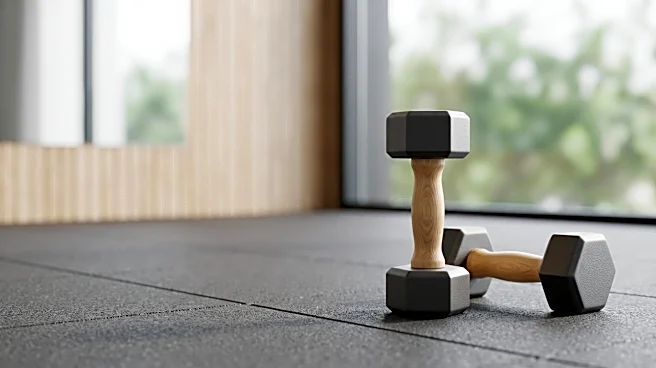
requires a dumbbell and a bench (or sturdy chair/ottoman). The exercise focuses on anti-rotation, demanding that the individual maintain a straight line from shoulders to ankles while rowing a dumbbell. A common mistake highlighted is adopting a tabletop position; instead, the goal is to create a longer lever for an increased anti-rotational challenge by squeezing abs and tightening glutes. Proper form also involves keeping the supporting arm in a safe, externally rotated position to prevent shoulder discomfort. The exercise is recommended as an accessory move to conclude a back workout, with a target of three sets of 10 to 12 repetitions per side.
Why It's Important?
This exercise is important for individuals seeking to enhance their core stability and back strength beyond traditional methods. The anti-rotational aspect of the elevated plank row directly translates to improved functional strength, which is crucial for various physical activities and injury prevention. By forcing the body to resist rotation, it engages deep core muscles more effectively than many standard exercises. This can lead to better posture, reduced risk of lower back pain, and enhanced athletic performance across different sports and daily movements. For fitness enthusiasts and athletes, incorporating such challenging variations ensures continuous progress and addresses potential plateaus in strength development, contributing to a more robust and resilient physique.
What's Next?
Individuals looking to incorporate the elevated plank row into their fitness regimen should focus on mastering the correct form before increasing weight or repetitions. Fitness professionals may integrate this exercise into advanced training programs for clients aiming to improve core stability and back strength. As awareness of functional fitness grows, more trainers and gyms might emphasize exercises like the elevated plank row, which offer comprehensive benefits beyond isolated muscle work. Continued research into exercise mechanics could further refine techniques and identify additional benefits or modifications for different fitness levels, potentially leading to its wider adoption in mainstream fitness routines.
Beyond the Headlines
The elevated plank row highlights a broader trend in fitness towards functional training, which emphasizes movements that mimic real-life activities and engage multiple muscle groups simultaneously. This approach moves beyond aesthetic-focused workouts to prioritize overall physical capability and injury resilience. The focus on anti-rotation in this exercise underscores the importance of core stability not just for a 'six-pack' but for protecting the spine and facilitating efficient movement throughout the body. Ethically, promoting exercises that prioritize proper form and functional benefits over sheer weightlifting or isolated movements can lead to healthier, more sustainable fitness practices, reducing the incidence of exercise-related injuries and fostering a more holistic understanding of physical well-being.